In today’s competitive manufacturing landscape, businesses are constantly searching for ways to optimize production efficiency while maintaining superior quality standards. Automatic spray painting has emerged as a game-changing technology that addresses these challenges head-on. This sophisticated process automates the application of coatings, paints, and finishes to various surfaces using robotic systems and computer-controlled mechanisms. Unlike traditional manual spray painting, automatic spray painting delivers consistent results, reduces material waste, and significantly accelerates production timelines.
The global industrial coating market is projected to reach $185 billion by 2030, with automated solutions accounting for a growing share of this expansion. Manufacturers across automotive, furniture, aerospace, and electronics industries are increasingly investing in automatic spray painting systems to stay competitive. Understanding the ins and outs of this technology is essential for business owners, plant managers, and professionals looking to modernize their operations.
What is Automatic Spray Painting?
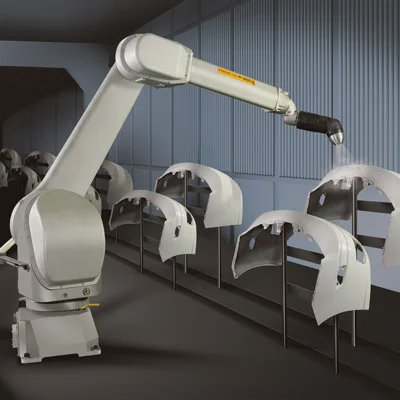
Automatic spray painting refers to the use of robotic systems and automated equipment to apply liquid coatings, paints, primers, and finishes to products and surfaces without human intervention. These systems utilize precision robotics, advanced control software, and high-tech spray equipment to achieve uniform coating coverage with minimal variation.
The core components of an automatic spray painting system include:
- Robotic Arm or Gantry System: The mechanical arm that holds and directs the spray gun
- Paint Supply System: Pressurized containers that deliver coating material at controlled rates
- Spray Gun or Applicator: Advanced nozzles designed for optimal atomization and coverage
- Control System: Computer software that programs spray patterns, timing, and pressure parameters
- Conveyor System: Movement mechanisms that position products for coating application
- Safety Features: Interlocks, ventilation systems, and emergency stops
The technology represents a significant evolution from manual spray painting, where human operators manually direct spray guns. Automatic spray painting eliminates human error, ensures repeatable precision, and enables 24/7 production capability. Modern automatic spray painting systems can apply coatings to complex geometries, curved surfaces, and intricate component designs that would be challenging or time-consuming to coat manually.
Key Characteristics of Automatic Spray Painting Systems
| Feature | Manual Spray Painting | Automatic Spray Painting |
|---|---|---|
| Consistency | Variable | Highly Consistent |
| Speed | Slower (100-200 units/hour) | Faster (500-2000+ units/hour) |
| Material Waste | 15-25% | 3-8% |
| Labor Requirement | High | Minimal |
| Quality Variation | 5-15% defect rate | <2% defect rate |
| Operational Cost | Higher per unit | Lower per unit |
| Setup Time | Quick | Longer initial setup |
How Automatic Spray Painting Works
Understanding the operational mechanics of automatic spray painting helps businesses make informed decisions about implementation. The process involves several interconnected steps that work in harmony to deliver professional results.
The Spray Painting Cycle
Step 1: Product Positioning The system begins by positioning the product or component on a conveyor belt, turntable, or positioning fixture. Modern automatic spray painting systems use sensors and vision systems to detect part location and orientation. These sensors communicate with the control system to ensure accurate spray gun placement and angle before coating application begins.
Step 2: Pre-Spray Preparation Before any coating application, the system performs automatic checks. Compressed air removes any dust or debris from the product surface. Some advanced systems incorporate electrostatic pre-treatment to enhance paint adhesion and reduce material consumption. Temperature and humidity sensors verify environmental conditions are within optimal parameters (typically 15-25°C and 40-60% relative humidity).
Step 3: Spray Application The robotic arm positions the spray gun at a precise distance (usually 15-25 cm) from the product surface. The spray pattern is controlled through programmed coordinates that the robot follows automatically. The spray gun atomizes the coating material into fine particles, creating an even, uniform layer. Multiple passes may occur if thick coatings are required, with precise timing between passes to allow partial drying.
Step 4: Drying and Curing After coating application, products move to drying sections where controlled temperature and air circulation facilitate solvent evaporation and coating cure. Infrared heaters, convection ovens, or air-dry systems depending on coating type and production requirements. Advanced systems monitor drying progress and adjust parameters in real-time.
Step 5: Quality Inspection Modern automatic spray painting systems incorporate automated quality control. Computer vision systems scan the finished product to detect missed spots, drips, runs, or uneven coverage. Some systems use spectroscopy to verify coating thickness and color accuracy. Products failing quality standards are automatically flagged for manual touch-up or rejection.
Suggested read: Athlete's Foot Spray: Treatment Options and How to Use Them
Technology Behind Automatic Spray Painting
The sophistication of modern automatic spray painting relies on several technological innovations:
Electrostatic Spray Technology: This advancement uses electrical charges to attract coating particles to grounded products. Benefits include 70-90% material transfer efficiency (compared to 50-70% for conventional spraying), significantly reduced overspray, and improved coating uniformity.
HVLP (High Volume Low Pressure) Systems: These systems use lower air pressure with higher volume, resulting in better material atomization, reduced bounce-back, and improved worker safety compared to conventional high-pressure spray systems.
AIRLESS Spray Systems: Particularly effective for thicker coatings, these systems atomize paint through pressure alone without compressed air, enabling application of high-viscosity materials with minimal overspray.
Robotic Vision Systems: Camera-equipped spray systems can analyze product geometry in real-time, automatically adjusting spray patterns to compensate for surface irregularities and complex shapes.
Applications and Industries Using Automatic Spray Painting
The versatility of automatic spray painting has led to widespread adoption across numerous industries. Each sector benefits from unique advantages tailored to their specific production requirements.
Automotive Industry
The automotive sector represents the largest user of automatic spray painting technology. Car manufacturers apply automatic spray painting to vehicle bodies, frames, interior components, and parts. Production volumes justify the investment in sophisticated systems, with facilities processing hundreds of vehicles daily. Benefits include exceptional finish quality, precise color matching across production runs, and rapid throughput. A typical automotive paint line processes 60-100 vehicles per hour, which would be impossible to achieve manually with consistent quality.
Furniture Manufacturing
Furniture manufacturers use automatic spray painting for wood components, metal frames, and upholstered structures. The technology enables intricate patterns, gradient effects, and specialized finishes (matte, gloss, metallic) that enhance product appeal. Small to medium-sized furniture makers increasingly invest in smaller-scale automatic spray painting systems, recognizing ROI through reduced labor costs and improved product consistency.
Aerospace and Defense
Precision is paramount in aerospace applications. Automatic spray painting ensures uniform coating thickness on aircraft fuselages, components, and structural elements. These coatings serve functional purposes including corrosion protection, heat resistance, and electromagnetic shielding. The technology’s ability to maintain exacting standards makes it indispensable in aerospace manufacturing.
Electronics Manufacturing
Consumer electronics manufacturers apply automatic spray painting to protective coatings, conformal coatings, and aesthetic finishes on device housings. The precision of automated systems prevents overspray on sensitive electronic components while ensuring complete coverage of designated areas.
Metal Fabrication and Industrial Equipment
Heavy equipment, machinery frames, and metal fabricated products benefit from automatic spray painting’s ability to coat complex geometries rapidly. Industrial equipment manufacturers achieve protective finishes that extend product lifespan while maintaining professional appearance.
Suggested read: Open Cell Spray Foam: Everything You Need to Know About This Insulation Solution
Medical Device Manufacturing
Strict regulatory requirements in medical device production make automatic spray painting valuable. The technology ensures repeatable, controlled application of biocompatible coatings and protective finishes to medical components, maintaining compliance with FDA and international standards.
Benefits of Implementing Automatic Spray Painting
The decision to invest in automatic spray painting delivers tangible advantages that extend far beyond simple labor cost reduction. Understanding these comprehensive benefits helps justify the capital investment and strategic importance of this technology.
Enhanced Quality and Consistency
Automatic spray painting eliminates human variability from the coating process. Every unit receives identical spray patterns, pressure parameters, and application timing, resulting in exceptional consistency across production runs. Quality metrics improve dramatically—defect rates typically decrease from 10-15% (manual application) to <2% (automated application). Customers receive products with flawless finishes, enhancing brand reputation and reducing warranty claims related to coating defects.
Increased Production Efficiency
Production speed improvements directly impact profitability. Manual spray painting typically achieves 100-200 units per hour depending on product complexity. Automatic spray painting systems process 500-2,000+ units per hour, representing 5-10x throughput increases. Facilities achieve 24/7 operation without worker fatigue issues, effectively multiplying productive capacity without proportional facility expansion.
Significant Cost Savings
While initial capital investment is substantial ($150,000-$1,000,000+ depending on sophistication), long-term cost reductions are compelling:
- Material Waste Reduction: Automatic spray painting reduces coating material waste from 15-25% to 3-8% through superior transfer efficiency
- Labor Cost Reduction: Fewer workers required for spray painting operations, enabling reallocation to higher-value tasks
- Reduced Rework: Lower defect rates minimize expensive rework and scrap
- Energy Efficiency: Modern systems optimize compressed air usage and heating/drying efficiency
- Maintenance Optimization: Predictive maintenance using sensor data prevents costly unplanned downtime
Companies typically recover initial investment within 2-4 years through these accumulated savings.
Improved Worker Safety and Health
Manual spray painting exposes workers to hazardous chemicals, fine particulates, and ergonomic strain. Automatic spray painting eliminates occupational exposure to:
- Volatile organic compounds (VOCs)
- Particulate inhalation risks
- Chemical skin contact
- Repetitive strain injuries
- Noise exposure from spray equipment
This translates to reduced workers’ compensation claims, lower occupational health insurance premiums, and improved employee satisfaction and retention.
Environmental Benefits
Modern automatic spray painting systems significantly reduce environmental impact:
- Reduced VOC Emissions: Lower material waste means fewer harmful emissions
- Improved Air Quality: Advanced filtration and capture systems contain overspray
- Water Conservation: Some systems use water-based coatings with minimal environmental impact
- Compliance: Easier achievement of environmental regulations (EPA, EU directives) governing coating processes
- Sustainability Goals: Reduced material consumption aligns with corporate sustainability initiatives
Flexibility and Customization Capability
Advanced automatic spray painting systems accommodate diverse products and finishing requirements. Programmable spray patterns enable:
- Different product geometries on the same production line
- Custom color applications and gradient effects
- Varying coating thicknesses for different applications
- Quick changeovers between product types (minutes instead of hours)
This flexibility allows manufacturers to serve diverse customer bases without maintaining separate dedicated equipment.
Suggested read: Clear Coat Spray Paint: Professional Techniques, Applications, and Product Selection for Flawless Finishes
Types of Automatic Spray Painting Systems
Different applications and production volumes require different equipment configurations. Understanding available options helps businesses select optimal systems for their specific needs.
Robotic Arm Systems
Articulated robotic arms represent the most common automatic spray painting configuration. These systems feature 6-axis arms with spray guns mounted at the end effector. The arm moves through three-dimensional space with precise positioning accuracy (±0.5mm). Advantages include exceptional flexibility for complex geometries, ability to program multiple spray patterns, and relatively quick changeover between different products.
Ideal Applications: Automotive parts, appliances, furniture components, industrial equipment
Investment Range: $200,000-$800,000
Gantry Systems
Gantry systems use linear movement mechanisms (X, Y, and Z axes) to position spray guns over stationary or slowly-moving products. These systems excel at high-throughput applications with simpler geometries. Gantry systems often cost less than articulated robots and provide excellent repeatability for standardized products.
Ideal Applications: Flat panels, large surfaces, production lines with predictable product positioning
Investment Range: $150,000-$600,000
Reciprocating and Oscillating Systems
These systems use back-and-forth or circular motion combined with conveyor movement to apply coatings. The spray gun moves in programmed patterns while products move beneath it. This approach works well for relatively uniform products on continuous production lines.
Ideal Applications: Pipe coating, rod coating, continuous sheet processing, similar-sized components
Investment Range: $100,000-$400,000
HVLP (High Volume Low Pressure) Automatic Systems
These specialized systems use compressed air volume rather than pressure for atomization. They’re particularly effective for high-viscosity coatings, stains, and varnishes where conventional systems might cause excessive overspray or product defects.
Suggested read: The Ultimate Spray Tan Scrub: How to Prep, Maintain, and Remove Your Golden Glow
Ideal Applications: Furniture finishing, woodworking, specialty coating applications
Investment Range: $80,000-$300,000
Electrostatic Spray Systems
Electrostatic systems apply electrical charge to coating particles, causing them to wrap around grounded products. This approach dramatically improves transfer efficiency and reduces overspray, making it ideal for expensive coatings or high-precision applications.
Ideal Applications: Aerospace components, premium automotive finishes, specialty applications
Investment Range: $250,000-$1,200,000
Key Features of Modern Automatic Spray Painting Systems
Contemporary automatic spray painting equipment incorporates advanced features that maximize efficiency, quality, and operational flexibility.
Intelligent Control Systems
Modern systems utilize PLC (Programmable Logic Controller) and cloud-based software to manage spray operations. Features include:
- Real-time monitoring of spray pressure, temperature, and humidity
- Automated recipe storage for different product types
- Remote monitoring and troubleshooting capabilities
- Predictive maintenance alerts based on equipment usage patterns
- Integration with facility MES (Manufacturing Execution Systems) and ERP systems
Vision and Sensor Technology
Advanced cameras and sensors continuously monitor the spray process:
- Part Detection: Identifies product presence and position
- Quality Verification: Scans finished products for coverage completeness and defects
- Thickness Measurement: Verifies coating thickness meets specifications
- Color Matching: Ensures color consistency across production batches
- Environmental Monitoring: Tracks temperature, humidity, and air quality
Safety Systems
Modern automatic spray painting equipment incorporates comprehensive safety features:
- Interlocked access doors prevent operator entry during spray cycles
- Emergency stop buttons halt operations instantly
- Automated fire suppression in drying chambers
- Ventilation monitoring ensures adequate air circulation
- Pressure relief systems prevent overpressurization
- Grounding systems prevent static electricity accumulation
Material Management
Advanced systems optimize coating material usage and handling:
- Automated material level monitoring prevents supply depletion
- Precise metering ensures correct coating ratios for multi-component systems
- Cleaning cycles between color changes minimize waste
- Material recycling systems capture and reuse overspray in some applications
- Temperature control maintains coating viscosity within optimal ranges
Implementation Considerations for Automatic Spray Painting
Successfully implementing automatic spray painting requires careful planning and consideration of multiple factors beyond simply purchasing equipment.
Suggested read: How Long Do Spray Tans Last? Everything You Need to Know About Spray Tan Duration
Space and Facility Requirements
Automatic spray painting systems demand adequate facility infrastructure. Required considerations include:
- Floor Space: Minimum 500-1,000 square feet for typical systems; larger facilities may need 2,000+ square feet
- Ceiling Height: Most systems require 12-15 feet minimum to accommodate spray patterns and ventilation
- Electrical Supply: Three-phase power (200-480V depending on equipment size), often 100-200+ amps
- Compressed Air: Clean, dry compressed air at 80-100 PSI for most systems
- Ventilation: Spray booths with adequate exhaust capacity (4,000-10,000+ CFM depending on system size)
- Drainage: Floor drains or collection systems for overspray and cleaning solutions
Investment and ROI Analysis
Capital investment for automatic spray painting systems varies significantly based on sophistication and application:
| System Type | Typical Investment | Throughput (units/hour) | Annual Material Savings | Annual Labor Savings |
|---|---|---|---|---|
| Basic Gantry | $150,000 | 300-600 | $30,000-50,000 | $50,000-80,000 |
| Advanced Robot | $400,000 | 500-1,200 | $80,000-120,000 | $100,000-150,000 |
| High-End System | $800,000+ | 1,000-2,500+ | $150,000-250,000 | $150,000-250,000 |
Return on Investment Calculation: Most facilities achieve ROI within 24-48 months. Long-term benefits continue indefinitely, making the investment strategically valuable for companies with stable, ongoing production requirements.
Staffing and Training Requirements
Implementing automatic spray painting requires trained personnel, but in different roles than traditional spray painting:
- Equipment Operators: 1-2 personnel to load/unload products, monitor operations, and respond to alerts
- Maintenance Technicians: 1-2 personnel trained on mechanical, electrical, and software systems
- Quality Control Personnel: 1-2 individuals monitoring finished product quality
- System Programmers: Access to technical support for recipe development and process optimization
Many suppliers provide comprehensive training programs and ongoing technical support to ensure successful implementation.
Coating Material Selection
Automatic spray painting systems work with various coating types, but material selection impacts system configuration:
- Water-Based Coatings: Lower toxicity, easier cleanup, suitable for most automated systems
- Solvent-Based Coatings: Faster drying, superior durability, require enhanced ventilation
- UV-Cure Coatings: Require UV lamp integration but offer instant curing
- Powder Coatings: Require different equipment (electrostatic sprayers), not applicable to liquid spray systems
- Specialty Coatings: Some medical or aerospace coatings demand specific equipment certification
Case Study: Automotive Supplier Implementation
Company Profile: Mid-sized automotive parts supplier with annual production of 2 million components across 15 product lines
Challenge: Manual spray painting limited throughput to 400 units/hour with 12% defect rate. Labor costs consumed 35% of production expenses. Quality inconsistencies resulted in customer complaints and warranty costs exceeding $400,000 annually.
Solution: Implementation of two advanced robotic automatic spray painting systems with integrated vision quality control
Results After 18 Months:
- Throughput increased to 1,800 units/hour (4.5x improvement)
- Defect rate reduced to <1.5% (88% improvement)
- Material waste decreased from 22% to 5.8%
- Labor costs reduced by 60% in spray department
- Annual warranty claims decreased by $320,000
- Equipment investment recovered in 19 months
- Total operational cost per unit decreased by 48%
This case demonstrates the transformative potential of automatic spray painting investment in real-world manufacturing environments.
Suggested read: Fly Spray: Everything You Need to Know About Effective Fly Control Solutions
Challenges and Limitations of Automatic Spray Painting
While automatic spray painting delivers substantial benefits, understanding limitations helps set realistic expectations and identify suitable applications.
High Capital Investment
The primary barrier to adoption remains significant upfront investment. Businesses with limited capital or sporadic production may find ROI timelines unacceptable. Smaller manufacturers might struggle to justify costs if production volumes don’t support rapid ROI.
Mitigation Strategies:
- Leasing options available from many suppliers
- Start with smaller, modular systems and expand over time
- Explore shared/toll manufacturing arrangements
- Investigate used or refurbished equipment
- Calculate conservative ROI scenarios including maintenance costs
Complex Setup and Programming
Initial system setup requires expertise to program spray patterns, timing, and process parameters correctly. Complex product geometries may demand extended development time. Mistakes in programming lead to quality issues or material waste.
Mitigation Strategies:
- Engage supplier technical specialists during implementation
- Invest in comprehensive operator training
- Develop comprehensive documentation of proven recipes
- Use CAD-based simulation software to validate programs before production
- Establish close collaboration with equipment manufacturers
Maintenance Complexity
Automatic spray painting systems incorporate mechanical, electrical, and software components requiring specialized knowledge. Preventive maintenance is essential to avoid costly downtime.
Mitigation Strategies:
- Establish preventive maintenance schedules
- Stock critical replacement parts
- Train internal maintenance personnel through supplier programs
- Contract extended maintenance support from suppliers
- Monitor equipment performance metrics to anticipate issues
Inflexibility with Product Changes
Changing products or product designs may require significant reprogramming and setup time. Manufacturers producing highly diverse products may find single-line automatic spray painting less efficient than multiple flexible manual stations.
Mitigation Strategies:
- Select systems with modular designs allowing configuration changes
- Implement recipe management systems enabling quick changeovers
- Group similar products on same production lines
- Consider hybrid approaches with both automatic and manual capacity
Environmental and Health Regulations
Operating automatic spray painting facilities requires compliance with stringent environmental regulations governing VOC emissions, wastewater, and hazardous material handling.
Mitigation Strategies:
Suggested read: Spider Spray: Everything You Need to Know About Choosing and Using the Right Spider Repellent
- Invest in advanced filtration and capture systems
- Use water-based or low-VOC coating materials
- Implement proper ventilation and air quality monitoring
- Maintain detailed environmental compliance documentation
- Stay updated on evolving regulations
Future Trends in Automatic Spray Painting Technology
The automatic spray painting industry continues evolving with emerging technologies reshaping capabilities and applications.
Artificial Intelligence and Machine Learning
Next-generation automatic spray painting systems incorporate AI-powered optimization that continuously learns and improves processes:
- Predictive quality analysis anticipating defects before they occur
- Automatic recipe optimization adjusting parameters for specific materials and conditions
- Anomaly detection identifying equipment degradation early
- Computer vision advancing beyond simple defect detection to sophisticated analysis
IoT Integration and Industry 4.0
Modern systems integrate into comprehensive Internet of Things (IoT) ecosystems within smart factories:
- Real-time data collection from all system components
- Cloud-based analytics enabling facility-wide optimization
- Remote monitoring and control capabilities
- Integration with supply chain systems for automated material ordering
- Predictive maintenance triggered by sensor data analysis
Advanced Robotics
Robotic advancements improve automatic spray painting capabilities:
- Collaborative robots (cobots) working safely alongside human operators
- Advanced sensor integration enabling autonomous process optimization
- Improved dexterity for complex geometries and intricate spray patterns
- Modular designs enabling rapid configuration changes
Sustainable Coating Technologies
Environmental consciousness drives development of more sustainable spray coating approaches:
- Water-based coatings with performance matching traditional solvent systems
- Bio-based coating materials from renewable sources
- Closed-loop overspray recovery and recycling systems
- Zero-VOC coating technologies
- Automation specifically designed for sustainable materials
Custom and Small-Batch Solutions
Automated systems are becoming increasingly accessible for smaller operations:
- Compact, modular automatic spray painting systems for small manufacturers
- Desktop-scale solutions for specialized applications
- Reduced setup time enabling economical small production batches
- Cloud-based recipe libraries enabling knowledge sharing across manufacturers
Frequently Asked Questions About Automatic Spray Painting
What is the difference between automatic spray painting and manual spray painting?
Automatic spray painting uses computerized robotic systems to apply coatings without human intervention, while manual spray painting relies on skilled operators directing spray guns. Automatic spray painting delivers superior consistency, higher throughput (5-10x faster), reduced material waste (3-8% vs 15-25%), and lower defect rates (<2% vs 10-15%). However, automatic spray painting requires significant capital investment and is most economical for high-volume production.
How much does an automatic spray painting system cost?
Automatic spray painting system investment typically ranges from $100,000 to over $1,000,000 depending on sophistication and application. Basic gantry systems start around $150,000, while advanced robotic systems with vision quality control can exceed $800,000. Investment justification depends on production volume—generally 500,000+ annual units support ROI within 2-3 years.
What types of coatings can be applied with automatic spray painting?
Suggested read: Rustoleum Spray Paint Safety Data Sheets: Everything You Need to Know for Safe Application
Automatic spray painting systems accommodate most liquid coating types including water-based paints, solvent-based coatings, varnishes, stains, primers, protective coatings, and specialized finishes. System configuration may vary based on coating properties (viscosity, cure time, temperature requirements). Powder coatings require different equipment (electrostatic sprayers) incompatible with liquid spray systems.
How long does it take to implement an automatic spray painting system?
Implementation timeline typically requires 4-8 months from purchase through full production launch. This includes equipment fabrication (6-12 weeks), facility preparation (4-6 weeks), installation (2-4 weeks), testing and validation (2-3 weeks), and operator training (1-2 weeks). Critical path items include facility space preparation and compressed air infrastructure readiness.
Can automatic spray painting systems handle complex product geometries?
Advanced robotic automatic spray painting systems handle complex geometries effectively through multi-axis movement and programmed spray patterns. Vision systems guide spray gun positioning, and sophisticated algorithms adjust for surface irregularities. However, extremely complex shapes with deep recesses or internal cavities may require supplementary manual touch-up work.
What maintenance does automatic spray painting equipment require?
Maintenance requirements include regular cleaning of spray guns and fluid lines (daily), filter changes (weekly-monthly depending on usage), viscosity cup cleaning, preventive mechanical maintenance (quarterly), electrical system inspection, and software updates. Most manufacturers recommend 20-40 hours monthly preventive maintenance. Extended maintenance contracts with suppliers are recommended for optimal reliability.
What is the environmental impact of automatic spray painting?
Automatic spray painting reduces environmental impact compared to manual methods through reduced material waste (10-15% fewer emissions from overspray), improved energy efficiency, and reduced VOC release. Modern systems use advanced filtration, water-based coatings, and closed-loop designs. However, proper ventilation and compliance with environmental regulations remain essential.
How do automatic spray painting systems improve product quality?
Automatic spray painting delivers superior quality through consistent spray pressure, precise gun positioning, repeatable application timing, and uniform coating thickness. Computer vision systems detect missed spots or defects, and automated quality control prevents defective products reaching customers. Result is <2% defect rate versus 10-15% typical of manual application.
Suggested read: Best Automotive Clear Coat in Spray Can: Professional Results Made Easy
Are there workforce concerns with automatic spray painting implementation?
Implementation eliminates manual spray painting positions but creates new roles including system operators, maintenance technicians, and quality control personnel. Organizations can redeploy skilled workers to higher-value roles. Many suppliers provide transition support and training for existing staff members, and workforce concerns can be addressed through advance communication and training initiatives.
What is the return on investment timeline for automatic spray painting?
Most organizations achieve ROI within 24-48 months through combined benefits of reduced labor costs, material waste reduction, decreased rework costs, and operational efficiency improvements. The exact timeline depends on production volume, coating material costs, current labor expenses, and specific system investment. Conservative calculations typically show positive ROI within 3 years for facilities processing 500,000+ units annually.
Conclusion
Automatic spray painting represents a transformative technology reshaping manufacturing across automotive, furniture, aerospace, electronics, and industrial sectors. The capability to deliver consistent, high-quality finishes while reducing costs, improving safety, and enhancing environmental performance makes automatic spray painting a strategic investment for forward-thinking manufacturers.
The technology’s advantages—exceptional quality consistency, dramatically increased throughput, significant cost reduction, worker safety improvements, and environmental benefits—create compelling business cases for most high-volume production scenarios. While substantial capital investment and implementation complexity present legitimate barriers, the long-term advantages typically justify these initial hurdles within 2-4 years.
As manufacturing continues evolving toward Industry 4.0, automatic spray painting stands at the forefront of this transformation. Integration with artificial intelligence, IoT systems, and advanced robotics promises even greater capabilities and efficiency improvements. Manufacturers who embrace automatic spray painting technology today position themselves competitively for tomorrow’s market demands.
Ready to explore automatic spray painting for your manufacturing operation? Contact equipment suppliers for detailed assessments of your specific application requirements, ROI projections tailored to your production volumes, and comprehensive implementation support. The future of industrial coating is here—automatic spray painting delivers the quality, efficiency, and sustainability that modern manufacturing demands.
Sources and Further Reading
- Spray Coating Technology Market Analysis – Global Industry Reports, 2024
- Robotics in Manufacturing – Industrial Automation Association
- Environmental Standards for Coating Operations – EPA Coating Regulations Guide
- Automotive Painting Best Practices – Society of Automotive Engineers (SAE)
- Industrial Paint Application Systems – Technical Standards Organization