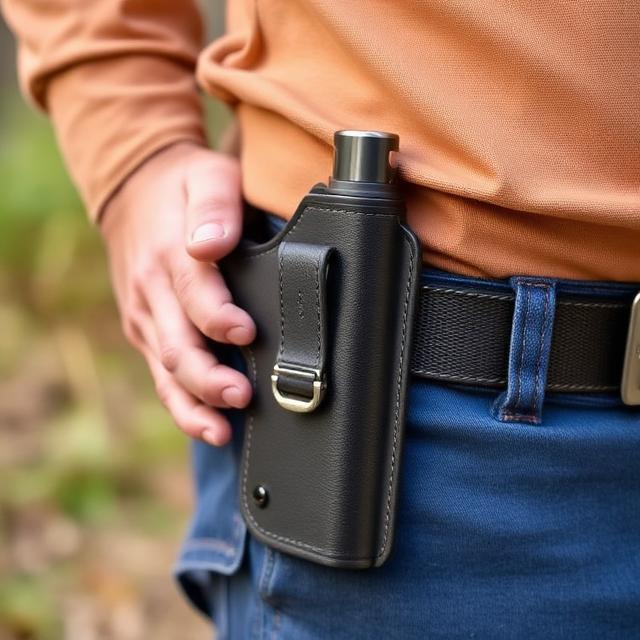
Why You Need a Proper Bear Spray Holster in the Wilderness
Look, if you’re heading into bear country without your bear spray easily accessible, you’re basically asking for trouble. And by “easily accessible,” I don’t mean buried at the bottom of your backpack under your lunch, rain jacket, and emergency toilet paper. I’m talking about a proper bear spray holster that keeps your canister within arm’s reach and ready to deploy in the 1-2 seconds you’ll have if you encounter an aggressive bear. That’s not being dramatic—that’s being realistic about wildlife safety in the backcountry.
The thing about bear encounters is they happen fast. Like, really fast. A charging grizzly can cover 50 yards in about 3 seconds, which means you’ve got basically no time to fumble around trying to find your bear spray. This is where a quality bear spray holster becomes literally life-saving equipment rather than just another piece of outdoor gear.
The right holster keeps your spray securely attached to your body or pack in a position where you can grab it instantly, pull it free without hassle, and get it into action before that bear closes the distance. Every second counts, and the difference between accessible and inaccessible bear spray can be the difference between walking away unharmed and ending up as a wildlife incident statistic.
Modern bear spray holsters have evolved way beyond the basic nylon pouches of the past. Today’s designs consider quick-release mechanisms, multiple carry options (hip belt, chest strap, backpack shoulder strap), weather protection, retention security, and compatibility with different canister sizes. Whether you’re a weekend day-hiker in Yellowstone, a serious backpacker tackling the CDT through grizzly territory, a bow hunter in Alaska, or a trail runner training in the Rockies, there’s a bear spray holster system designed specifically for your activity and needs. Getting the right one means understanding the options, knowing what features actually matter, and choosing based on how you’ll really use it rather than what looks cool in the product photos.
Understanding Bear Spray Holster Types and Designs
Hip Belt and Waist Holsters
Hip belt holsters are probably the most popular style for good reason—they position bear spray right at your waist level where it’s super easy to access without looking, doesn’t interfere with arm movement, and keeps the weight low on your body for better balance. These holsters typically attach to your pants belt, a dedicated hip belt on your backpack, or come as part of a standalone belt system. The placement means you can draw your spray with a natural hand motion similar to drawing a sidearm, which is intuitive even under stress when fine motor skills go out the window.
The attachment methods for hip belt holsters vary between designs. Some use simple belt loops that slide onto your pants belt—these work fine but can shift position when you’re hiking over rough terrain. Better options include MOLLE/PALS webbing attachments that lock positively onto tactical belts or pack hip belts with compatible webbing. The best systems use a combination of belt loops plus a secondary retention strap that wraps around the belt, preventing any side-to-side movement even when you’re scrambling over boulders or pushing through thick brush. This dual-attachment approach keeps the holster exactly where you positioned it regardless of how intense your activity gets.
Quick-release mechanisms on hip bear spray holsters range from simple elastic retention to sophisticated push-button releases. Basic designs use stretchy shock cord or elastic webbing that holds the canister snugly but lets you yank it free with a sharp pull. Mid-range holsters incorporate snap closures or Velcro straps that secure the canister but open quickly with one hand. Premium models feature push-button releases or rotating retention systems that lock the canister in place until you press or twist a release mechanism—these prevent accidental deployment if you fall but still allow instant access when needed. For bear safety, you want a balance between security (spray doesn’t fall out randomly) and speed (you can draw it in under 2 seconds).
Chest and Shoulder Strap Holsters
Chest-mounted holsters position your bear spray front and center on your torso, typically attaching to backpack shoulder straps or chest straps. This placement puts the canister right in your line of sight and within easy reach of either hand, which some people find even faster to access than hip-mounted options. The chest position works particularly well for backcountry skiers, trail runners, and cyclists who need the spray accessible without reaching behind them or down to their waist while moving at speed. It’s also great for people wearing heavy winter clothing where accessing a hip holster might mean digging through jacket layers.
Suggested read: Flea and Tick Spray: Your Essential Pet Protection Solution
The shoulder strap attachment style clips directly onto the padded shoulder straps of your backpack, positioning the spray canister on your chest between your shoulder and sternum. Most designs use compression straps, buckles, or elastic loops that wrap around the shoulder strap padding. The advantage here is versatility—you can move the holster up or down the strap to find your perfect position, and it works with basically any backpack that has shoulder straps. Some hikers run two holsters, one on each shoulder strap, carrying backup canisters or different spray types (bear spray plus personal defense spray for sketchy trailheads).
Chest strap systems integrate with the sternum strap on your pack, often replacing the standard buckle with a buckle-holster combination. These keep the spray canister centered on your chest and prevent it from bouncing around during high-impact activities like running. The integrated design means one less piece of gear to attach and adjust, though it locks you into using that specific chest strap position. Some outdoor athletes prefer this fixed positioning because it makes grabbing the spray a muscle-memory reflex—it’s always in exactly the same spot relative to your body, so you don’t have to think about where to reach under stress.
Backpack-Mounted Holster Systems
Backpack-integrated holsters built into or onto your pack offer secure carry with decent accessibility, though they’re generally slower to access than body-mounted options. These systems include external pockets on pack hip belts specifically sized for bear spray canisters, MOLLE webbing panels on the pack exterior where you attach modular holsters, or dedicated straps and loops designed to hold spray canisters on the pack’s side or front. The main advantage is keeping your spray with your pack (so you don’t forget it) while keeping it somewhat accessible without having to open the main pack compartment.
Side pocket holsters on backpacks position the bear spray canister in an external mesh or zippered pocket along the pack’s side panel. This works okay for lower-risk situations where you want the spray available but aren’t in active bear territory requiring instant access. The reality is reaching around to your pack’s side pocket while wearing the pack takes 5-10 seconds minimum, which is way too slow for a charging bear. However, for base camping situations where you take your pack off regularly, or for lower-risk day hikes where you want the spray “just in case,” side pockets offer a reasonable compromise between accessibility and secure storage.
Shoulder strap pockets on some modern backpacks include molded pockets or sleeves specifically designed to hold bear spray canisters on the front of the shoulder strap. These built-in systems offer better access than side pockets since the canister sits on your chest or shoulder. Brands like Osprey, Gregory, and Mystery Ranch incorporate bear spray-compatible pockets into their hiking and backpacking packs designed for use in bear country. The downside is you’re locked into using that specific pack design, but if you’re investing in a quality backpack for regular use in grizzly territory, the integrated holster feature is worth considering.
Key Features to Look for in a Bear Spray Holster
Quick-Draw Access and Release Speed
Access time is literally the most critical feature of any bear spray holster. In a real encounter, you’ll have 2-4 seconds maximum to deploy your spray before a charging bear is on top of you. Your holster needs to allow one-handed access without looking, without fumbling with complicated closures, and without the canister getting stuck. The gold standard is being able to draw and deploy in under 2 seconds from a standing position—practice this at home with an empty or inert training canister to verify your holster meets this standard.
One-handed operation is non-negotiable because your other hand might be steadying yourself against a tree, holding trekking poles, or protecting your face. The best bear spray holster designs let you grab the canister with your dominant hand, pull straight up or out (depending on holster orientation), and immediately have it in firing position with your thumb on the trigger. Avoid holsters requiring two hands to open straps, unclip buckles, or twist locking mechanisms unless those mechanisms are easily defeatable with one-handed operation under stress. Test this with gloves on too, since you’ll often be wearing gloves in cold weather when bears are still active.
The retention vs. accessibility balance is where holster design gets tricky. You want the canister held securely enough that it won’t fall out if you trip, do a river crossing, or scramble up steep terrain. But you also need it to release immediately when you need it. The best systems use adjustable retention—usually a tensioning screw or strap that you can tighten or loosen to match your preference and activity level. Set it loose enough for quick draws during practice, then tighten slightly for the actual trail to account for adrenaline giving you extra pulling force in a real encounter.
Suggested read: How Long Does Spray Tan Last? Your Expert Guide to Tan Duration
Weather Protection and Durability
Material durability matters because your holster will get beat up on the trail. Cheap nylon holsters fall apart after a season of serious use—stitching fails, fabric tears, attachment points rip out. Quality holsters use heavy-duty Cordura nylon (500D to 1000D), ballistic nylon, or even Kevlar-reinforced materials that handle abrasion from pack straps, tree bark, rocks, and general backcountry abuse. The stitching should be reinforced at stress points (attachment loops, canister opening), and hardware (buckles, D-rings, snaps) should be metal or heavy-duty plastic rated for outdoor use.
Weather resistance protects both the holster and your bear spray from moisture, which can corrode the canister or affect the trigger mechanism. Look for holsters with water-resistant coatings or treatments, drainage grommets that let water escape if the holster gets soaked, and materials that dry quickly. Some premium bear spray holsters include fitted rain covers that completely enclose the canister while still allowing quick access—you just flip open the cover before drawing. This protection is especially important in wet climates like Southeast Alaska or the Pacific Northwest where your gear stays damp for days.
UV resistance prevents the holster materials from degrading in harsh sunlight. If you’re hiking in alpine environments or desert areas where UV exposure is intense, cheap plastics and fabrics will become brittle and crack within a season or two. Quality outdoor materials include UV inhibitors that maintain flexibility and strength even after hundreds of hours in direct sunlight. Check reviews from users in your climate zone to see how holsters hold up under the specific conditions you’ll face—a holster that works great in temperate forests might fail quickly in desert sun or arctic cold.
Compatibility with Different Canister Sizes
Bear spray canisters come in several sizes, and not all holsters fit all sizes. The most common canister sizes are 7.9 ounces (225g), 9.2 ounces (260g), and 10.2 ounces (290g), with dimensions varying by brand even within the same weight class. Counter Assault, UDAP, and Frontiersman (the major bear spray brands) each have slightly different canister shapes. A holster that fits Counter Assault perfectly might be too tight for Frontiersman or too loose for UDAP. Check the manufacturer’s compatibility chart before buying to ensure your preferred spray brand fits properly.
Adjustable holsters offer the most flexibility, using elastic retention systems, adjustable straps, or universal mounting that accommodates multiple canister sizes. These designs typically work with any 7-9 ounce canister regardless of brand, making them ideal if you switch spray brands based on what’s on sale or available. The trade-off is they’re less custom-fitted than holsters designed for one specific canister model, so the fit might be a bit loose or tight depending on the exact canister you use. For most users, the versatility outweighs the slightly imperfect fit.
Brand-specific holsters made by the bear spray manufacturers (Counter Assault makes their own holsters, UDAP makes theirs, etc.) guarantee perfect fit for their canisters but lock you into that brand. This isn’t necessarily bad—if you consistently buy the same brand based on spray performance or price, a brand-specific holster makes sense. These custom holsters often include additional features like integrated spray pattern diagrams, safety reminders printed on the holster, or designed-in accommodations for that brand’s trigger and safety mechanism. Just be aware you’ll need a different holster if you switch spray brands.
Best Bear Spray Holsters on the Market
Top-Rated Chest Holsters
UDAP Chest Holster is basically the industry standard for chest-mounted bear spray carry and what many wildlife professionals use. This holster clips onto both shoulder straps of your backpack, positioning the spray canister right on your chest for instant access with either hand. The elastic retention system holds the canister securely but releases with a firm pull, and the included safety strap provides secondary retention you can clip or unclip depending on terrain difficulty. It fits all major 7.9-9.2 oz canisters, costs around $20-$25, and the build quality is solid with reinforced stitching and durable materials.
The chest holster design keeps the spray visible in your peripheral vision, which provides peace of mind and serves as a constant reminder that you’re in bear country. Some users find the chest position perfect for quick access while others feel it gets in the way of the pack’s chest strap or hits them in the chin on rough terrain. The holster works equally well for left or right-hand draw, making it ambidextrous. It’s lightweight (under 2 ounces), packs flat when empty, and has proven itself on thousands of backcountry trips from Alaska to Wyoming.
Suggested read: Automatic Air Freshener Spray Dispenser Wall Mounted: Your Home & Business Solution
Counter Assault Chest Holster offers a premium alternative with some added features. This model includes a quick-release buckle system that lets you completely remove the holster from your pack straps without threading them through loops—useful when you’re sharing one holster between multiple packs or want to transfer it quickly. The retention system uses both elastic and a snap strap for dual security, and the materials are slightly heavier-duty than the UDAP. Price runs $30-$35, so you’re paying a bit more for the convenience features and brand name.
Best Hip Belt Holsters
Frontiersman Bear Spray Holster with adjustable belt loop gives you versatile hip carry that works on pants belts, pack hip belts, or standalone duty belts. The holster uses a rotating retention system—you twist the canister 90 degrees to lock or unlock it, which prevents accidental falls but still allows fairly quick access once you get used to the motion. The design fits Frontiersman 9.2 oz canisters perfectly and accommodates most other brands reasonably well. At $15-$20, it’s affordable and well-built with quality nylon construction and metal D-ring attachments.
The retention mechanism on the Frontiersman holster is unique and takes some practice to use smoothly. You twist the canister clockwise to lock it in (great for preventing drops during active hiking), then twist counter-clockwise while pulling up to draw. Under stress, this two-motion action might slow you down compared to simple pull-release systems, but the security during normal use is excellent. Many hunters who spend all day in rough terrain prefer this design because their spray absolutely won’t fall out even during crawling through brush or climbing steep slopes.
Molle-compatible hip holster from brands like Condor or 5.11 Tactical offer universal attachment to any belt or pack with MOLLE webbing. These tactical-style holsters typically use snap closures or elastic retention with an adjustable tensioning screw to customize how tight or loose the canister fits. The build quality is military-grade with reinforced stitching, heavy Cordura materials, and bomb-proof hardware. Price ranges from $20-$40 depending on brand and features. The tactical aesthetic isn’t for everyone, but the functionality and durability are hard to beat.
Universal and Adjustable Options
Mystery Ranch Bear Spray Holster represents the premium end of the market with features designed for serious backcountry use. This holster mounts to backpack shoulder straps, hip belts, or standalone belts using their proprietary Futura yoke attachment system. The elastic retention adjusts to fit any canister size from 7.9 to 10.2 ounces, and the quick-pull tab lets you draw the canister with one motion. The materials are bombproof—500D Cordura with reinforced bar-tacking at stress points. At $35-$45, it’s expensive, but the quality justifies the price for people who live and work in bear country.
Maxpedition Bottle Holder adapted for bear spray use by outdoor enthusiasts offers surprising functionality despite not being purpose-built for bear spray. This versatile pouch attaches via MOLLE, belt loops, or carabiners to virtually any pack or belt system. The elastic retention stretches to accommodate different canister sizes, and the drawstring top closure provides weather protection while still allowing quick access. The military-grade construction means it’ll last for years of heavy use. Price is around $15-$25, and the versatility means you can use it for water bottles, bike tools, or other gear when not carrying bear spray.
| Holster Model | Mount Type | Price | Best For | Retention System |
|---|---|---|---|---|
| UDAP Chest | Shoulder straps | $20-$25 | All-around use | Elastic + safety strap |
| Counter Assault Chest | Shoulder straps | $30-$35 | Premium features | Elastic + snap strap |
| Frontiersman Hip | Belt/hip belt | $15-$20 | Active hiking | Twist-lock |
| MOLLE Tactical | MOLLE webbing | $20-$40 | Versatile attachment | Adjustable snap |
| Mystery Ranch | Multi-position | $35-$45 | Premium durability | Quick-pull elastic |
| Maxpedition | Universal | $15-$25 | Budget option | Drawstring + elastic |
How to Choose the Right Bear Spray Holster for Your Needs
Activity-Specific Considerations
Day hiking in bear country typically calls for a chest or shoulder strap holster that keeps spray accessible while leaving your hands free for trekking poles or scrambling. You’re probably wearing a light daypack, so attaching a holster to the shoulder straps or chest strap makes sense. The spray stays visible and top-of-mind, reminding you that you’re in bear territory and encouraging bear-aware behavior (making noise, staying alert). For day hikes, prioritize quick access over weather protection since you’ll probably be out for just a few hours and can monitor changing conditions closely.
Backpacking and multi-day trips require balancing accessibility with secure carry since you’ll be wearing your pack for many hours across varied terrain. A hip belt holster on your backpack’s waist belt works great here—it keeps weight low, doesn’t interfere with shoulder strap adjustment, and positions the spray for easy access without removing your pack. Consider a holster with good weather protection since you’ll be out in whatever nature throws at you, and the spray canister needs to stay dry and functional. Some backpackers carry their spray in a chest holster during the day and transfer it to a pack pocket for camp, giving them the best of both worlds.
Suggested read: Spray Tan Sun Protection: What You Need to Know About UV Safety and Fake Tans
Trail running in bear country demands the absolute fastest access since you’re moving quickly and might literally run into a bear around a blind corner. Chest-mounted holsters work best for runners because they don’t bounce against your hips like belt holsters do, and they keep the spray in your line of sight. Look for holsters with excellent retention since the impact forces from running will try to shake your canister loose. Some trail runners prefer minimalist designs that add minimal weight and bulk, while others want bombproof retention even if it adds an ounce or two. Test your chosen holster on training runs before heading into serious bear country.
Mounting Location Preferences
Dominant hand vs. weak hand positioning affects draw speed and natural motion. Right-handed people typically mount hip holsters on their right side for same-side draw, while left-handed people prefer left-side mounting. However, some experts recommend weak-hand positioning (right-handed person carries on left hip) because your dominant hand is likely holding trekking poles, a camera, or other gear, and you’ll instinctively reach for the spray with your free hand. This is personal preference based on how you actually use your hands in the backcountry, so think through your typical hiking behavior before deciding.
Height placement on your body changes accessibility and comfort. Hip holsters mounted low on the belt provide stable carry but require reaching farther down to grab the spray. Mounting higher on the waist or even at lower-chest height reduces draw distance but can interfere with pack hip belts or feel awkward when walking. Chest holsters obviously sit high, providing fast access but sometimes catching on gear or feeling obtrusive. There’s no universally correct height—it depends on your build, pack fit, typical clothing layers, and personal comfort. The only way to know is trying different positions before committing.
Pack integration vs. body carry presents a fundamental choice. Holsters attached to your pack (shoulder straps, hip belt, exterior) stay with the pack, which you might set down at rest stops or water sources—potentially leaving your spray inaccessible when you need it. Body-worn holsters on your pants belt or a separate duty belt stay with you even when you drop your pack, ensuring the spray is always accessible. The trade-off is body-worn holsters add another piece of gear to put on and adjust, while pack-mounted holsters are one-and-done setup. Consider how you use your pack in the field—if you rarely take it off, pack mounting works fine; if you drop your pack frequently, body carry is safer.
Budget and Quality Balance
Entry-level holsters in the $10-$20 range handle basic carry needs and work fine for occasional users or people hiking in lower-risk bear areas. These budget options typically use simple elastic retention, basic nylon construction, and straightforward mounting systems. They’ll carry your bear spray adequately and provide decent accessibility, though don’t expect exceptional durability or premium features. For someone taking an annual camping trip to Yellowstone or hiking occasionally in the Smokies, entry-level holsters represent good value without over-investing in features you won’t use.
Mid-range holsters ($20-$35) offer the sweet spot for most users—better materials, improved retention systems, weather-resistant features, and construction that’ll last multiple seasons of regular use. Brands like UDAP, Counter Assault, and Frontiersman fall into this category with their name-brand holsters designed specifically for bear spray carry. You’re paying for purpose-built features (quick-release mechanisms, reinforced stitching, proper sizing for bear spray canisters) and reliability that matters when seconds count. Most serious hikers, backpackers, and outdoor enthusiasts find mid-range holsters worth the investment.
Premium holsters ($35-$50+) from companies like Mystery Ranch, Hill People Gear, or custom makers provide bombproof construction, innovative features, and materials designed for professional guide use or extreme conditions. These holsters might include proprietary attachment systems, multiple mounting options, exceptional weather protection, or lifetime warranties. Unless you’re a wilderness guide, backcountry ranger, or spend 50+ days per year in serious bear country, premium holsters might be overkill. However, if you demand the absolute best gear and plan to use it for years, the cost-per-use makes sense.
Using Your Bear Spray Holster Safely and Effectively
Proper Mounting and Adjustment
Initial setup of your bear spray holster requires more thought than just clipping it wherever. First, determine the ideal position based on your body dimensions, pack setup, and dominant hand. Attach the holster and insert your bear spray canister (use an empty or inert practice canister for this), then simulate drawing the spray repeatedly. Your hand should reach the canister naturally without looking, grab it comfortably, and pull it free smoothly. If you’re straining, reaching awkwardly, or can’t find the canister without looking down, adjust the position until the motion feels intuitive.
Suggested read: The Ultimate Spray Tan Scrub: How to Prep, Maintain, and Remove Your Golden Glow
Tension adjustment on retention systems needs careful balancing. Start with loose retention and practice drawing the canister repeatedly until the motion is smooth and consistent. Then progressively tighten the retention until you feel resistance that requires a firm, deliberate pull rather than an easy slide-out. The goal is preventing accidental loss during normal activity while still allowing instant access under stress (when adrenaline will make your pulls more forceful). Test the adjusted retention by doing jumping jacks, light jogging, and simulated stumbles—if the canister stays put, you’ve found the right tension.
Regular checks during trips ensure your holster hasn’t shifted, loosened, or developed problems. Each morning before starting your hike, verify the holster attachment is secure and the canister is properly seated. After river crossings, particularly rough terrain sections, or any falls, check again. Some people make holster checks part of their routine rest-stop ritual alongside checking boot laces and pack straps. This habit ensures your bear protection stays accessible when you need it rather than discovering problems only when facing an actual bear.
Practice and Training
Draw practice should happen at home, not when you’re facing a bear. Use an empty canister or inert practice spray (available from bear spray manufacturers) and rehearse drawing from your holster 20-30 times until the motion is automatic muscle memory. Practice from different positions—standing, sitting, kneeling, lying on the ground. Practice with gloves on, wearing different jacket layers, and while holding trekking poles. The goal is developing a reflex where your hand goes to the holster, grabs the canister, and brings it to firing position without conscious thought.
Deployment drills take practice further by simulating actual use scenarios. Set up a target (a piece of cardboard with a bear silhouette) at various distances (20 feet, 30 feet, 40 feet) and practice drawing and aiming (don’t actually spray unless using an inert trainer). Time yourself—you should consistently draw and aim within 2-3 seconds. Practice while backing away (what you should do during a bear encounter), practice while shouting (you should be yelling at the bear), and practice from surprise positions (turning around suddenly to face an imaginary bear behind you).
Scenario training with a partner adds valuable realism. Have your partner call out surprise “bear” alerts while you’re hiking, requiring you to draw and aim immediately. Practice in different terrains—flat trail, uphill, downhill, crossing streams. Practice in different weather—rain, wind, cold requiring gloves. The more varied your practice scenarios, the more prepared you’ll be for the unpredictability of real bear encounters. Consider taking a bear safety course that includes hands-on bear spray practice with inert canisters—many outdoor retailers and national parks offer these classes.
Maintenance and Storage
Cleaning your holster after trips prevents dirt, debris, and moisture from degrading materials or affecting function. Brush off dried mud, rinse with water if needed, and allow to air dry completely before storing. Check all stitching, buckles, and attachment points for wear or damage. If you notice fraying threads, loose rivets, or cracked plastic components, repair or replace immediately—don’t wait until your next trip. A few minutes of post-trip inspection and maintenance keeps your holster reliable for years.
Off-season storage for holsters not in regular use involves cleaning, drying completely, and storing in a cool, dry place away from direct sunlight. Don’t leave bear spray canisters in holsters during storage—the constant pressure can deform elastic retention systems over time. Store the holster flat or hanging rather than compressed under other gear. Consider storing a small silica gel packet with the holster to absorb any residual moisture that might promote mold or mildew growth, especially in humid climates or damp basements.
Periodic replacement becomes necessary even with well-maintained holsters. UV damage, material fatigue, and general wear eventually compromise function and safety. Most quality holsters last 3-5 years of regular use before needing replacement, longer if used only occasionally. Signs it’s time for a new holster include: frayed stitching, cracked or brittle materials, retention systems that no longer hold firmly, attachment points pulling away from the main body, or any damage that affects the holster’s ability to securely hold and quickly release the canister. Your bear spray holster is safety equipment—don’t penny-pinch on replacement when wear becomes apparent.
Suggested read: Best OC Spray for Personal Protection: Top-Rated Options That Work
Common Mistakes to Avoid with Bear Spray Holsters
Inaccessibility and Poor Positioning
Burying your spray in a backpack pocket, stuff sack, or anywhere requiring more than 2-3 seconds to access defeats the entire purpose of carrying bear spray. I’ve seen hikers with their spray at the absolute bottom of their pack, under their tent, sleeping bag, and food bag—basically useless in an actual encounter. Even “accessible” pack pockets like side mesh pockets or front zippered compartments require too much time if you’re wearing the pack. A proper bear spray holster solves this by keeping the spray literally at your fingertips, but only if you actually use the holster correctly.
Wrong-side mounting happens when people put their holster where it’s convenient for packing rather than where it’s accessible for drawing. I’ve seen chest holsters positioned so low they require looking down to find them, hip holsters mounted on the back hip where you can’t reach them easily, and shoulder strap holsters placed where pack straps or sternum straps block access. Before finalizing your holster position, practice drawing from it repeatedly with your eyes closed—if you can’t grab the canister immediately and smoothly, reposition until you can.
Forgetting about winter layers leads to holster positioning that works great in summer but becomes inaccessible under puffy jackets and rain shells. If you hike in varying seasons, position your holster considering your heaviest likely clothing layers. A hip holster that’s perfect with just a t-shirt might be completely buried under a down jacket and rain shell. Some people run dual setups—hip holster for summer, chest holster for winter—to ensure accessibility year-round. Others position their year-round holster higher on the body (upper hip or lower chest) where it remains accessible over clothing layers.
Neglecting Practice and Familiarization
Never practicing draws is shockingly common among people who carry bear spray. They buy the spray, buy a holster, clip it on their pack, and head into bear country without ever practicing drawing and aiming. Then they’re surprised when their first-ever draw attempt is fumbling and slow. Bear spray companies sell inert practice canisters for exactly this reason—you can practice drawing and deployment without wasting expensive spray. If you can’t deploy your spray smoothly and quickly in the calm comfort of your backyard, you definitely can’t do it while a grizzly is charging.
Ignoring environmental factors during practice leads to false confidence. You practice drawing your spray on a sunny day in your driveway while wearing a t-shirt and feel great about your readiness. Then in the field you’re wearing gloves, a rain jacket, and carrying trekking poles, and suddenly that smooth draw is awkward and slow. Practice in realistic conditions—wear the clothes you’ll hike in, use the poles you’ll carry, practice in the rain, practice with cold hands in gloves. Environmental factors that seem minor become major obstacles under stress when fine motor control diminishes.
Assuming you’ll remember how to use the spray under stress is dangerously optimistic. Adrenaline does weird things to memory and motor skills. Skills that feel automatic in practice can evaporate under pressure if they’re not truly ingrained through repetition. This is why law enforcement and military personnel practice their safety-critical skills to the point of boredom—when stress hits, performance reverts to your lowest level of recent practice. If your last draw practice was six months ago when you bought the holster, you’re probably not ready for a real encounter. Regular practice (even just 5 minutes every few weeks) maintains the muscle memory and confidence you’ll need.
Equipment Mismatches and Incompatibility
Wrong canister size for your holster creates dangerous situations. A too-small canister in an oversized holster rattles around, shifts position, and might fall out during active hiking. A too-large canister in an undersized holster either won’t fit at all or fits so tightly you can’t draw it quickly. Always verify compatibility before heading into the field. If you switch bear spray brands or canister sizes, test-fit the new canister in your existing holster and verify it holds securely but draws smoothly. Don’t assume “it’ll probably work”—test it or get the right holster.
Pack incompatibility frustrates people who buy a holster without considering their pack’s design. Some pack hip belts are too narrow for certain holsters to clamp onto. Some chest straps are positioned where they interfere with chest-mounted holsters. Some packs lack the webbing or attachment points that specific holsters require. Before buying a holster, check your pack’s specifications and verify compatibility. If possible, bring your pack to the outdoor store and physically test-fit the holster before purchasing. This five-minute check saves the hassle of returning incompatible gear and ensures you’ll actually use the system.
Suggested read: Terp Spray: Everything You Need to Know About Terpene Sprays
Seasonal gear changes can unexpectedly affect holster function. The hip belt holster that works perfectly on your summer daypack might not fit your winter ski touring pack with its wider, more padded hip belt. The chest holster positioned perfectly over a light shirt becomes blocked by a puffy jacket’s high collar. The shoulder strap holster that clears your summer pack’s sternum strap hits the adjustment buckle on your winter pack’s sternum strap. If you use different packs or clothing systems seasonally, verify your holster setup works with all configurations, or plan to adjust positioning as needed.
Frequently Asked Questions About Bear Spray Holsters
What is the best position to carry bear spray?
The best position for a bear spray holster depends on your activity and preferences, but chest or hip belt mounting provides optimal accessibility for most users. Chest-mounted holsters on backpack shoulder straps keep spray visible and accessible with either hand, making them excellent for fast-paced activities like trail running or skiing. Hip belt holsters positioned on your dominant hand side offer natural drawing motion and keep weight low, working well for hiking and backpacking. The critical factor is quick access—your holster should position the spray where you can grab and deploy it within 2-3 seconds without looking. Practice drawing from different positions to find what works best for your body and gear setup.
Can I make my own bear spray holster?
DIY bear spray holsters are possible but not recommended for primary safety equipment. You can create functional holsters using materials like heavy nylon webbing, elastic cord, buckles, and basic sewing skills—many ultralight backpackers have made custom holsters to save weight or achieve specific mounting configurations. However, commercial holsters are relatively inexpensive ($15-$40), purpose-designed for quick access and secure retention, and tested for reliability. If you enjoy DIY projects, making a backup holster or experimenting with custom solutions is fine, but invest in a proven commercial holster for your primary bear protection. Your life might depend on that holster working perfectly under stress.
How tight should a bear spray holster be?
Optimal tension in a bear spray holster requires balance—tight enough to prevent accidental loss but loose enough for quick deployment. The canister should not fall out when you jump, run, or stumble, yet you should be able to draw it with one sharp pull in under 2 seconds. Most quality holsters include tension adjustment mechanisms (screws, straps, or elastic tension) that let you fine-tune this balance. Start loose and progressively tighten until you feel confident the canister won’t fall out during active movement. Practice drawing repeatedly to ensure you can still access it quickly. Under stress, adrenaline provides extra strength, so slightly tight retention that requires deliberate force in practice will break free easily in a real encounter.
Do I need a different holster for different bear spray brands?
Holster compatibility varies between designs. Universal or adjustable holsters fit multiple bear spray brands and sizes (typically any 7.9-10.2 oz canister), providing flexibility if you switch brands or use different sprays for different trips. Brand-specific holsters made by spray manufacturers (Counter Assault holster for Counter Assault spray, UDAP holster for UDAP spray) guarantee perfect fit but lock you into that brand. For most users, universal holsters offer better value and versatility unless you’re committed to one specific spray brand long-term. Always check the holster manufacturer’s compatibility chart before purchasing, and physically test-fit your specific canister if possible before heading into the backcountry.
Can I use a water bottle holster for bear spray?
Water bottle holders adapted for bear spray use can work as budget alternatives to purpose-built holsters, though they’re generally not ideal for safety-critical applications. Standard elastic bottle holders with open tops provide decent retention for similarly-sized items, and bear spray canisters (about 3 inches diameter, 8-9 inches tall) fit many bottle holder designs. However, bottle holders typically lack the security features, quick-release mechanisms, and specific design considerations of real bear spray holsters. If you’re using a bottle holder temporarily or in lower-risk bear areas, it’s acceptable, but invest in a proper bear spray holster for serious backcountry travel in active bear territory.
How do you clean a bear spray holster?
Cleaning and maintaining your bear spray holster extends its life and ensures reliable function. After trips, brush off dirt and debris, wipe down with a damp cloth if needed, and allow to air dry completely before storage. For deeper cleaning, hand-wash with mild soap and water, paying attention to retention mechanisms, buckles, and attachment points. Rinse thoroughly and air dry away from direct heat or sunlight.
Check stitching for fraying, inspect elastic components for loss of tension, and verify all hardware (buckles, snaps, D-rings) functions smoothly. If you’ve had actual bear spray discharge near the holster, wash it extensively to remove any spray residue that could cause skin irritation. Replace worn components or the entire holster if damage compromises security or quick-release functionality.
Suggested read: Spray Rose Flowers: Everything You Need to Know About These Stunning Blooms
Should bear spray be on hip belt or chest?
Hip belt vs. chest mounting for bear spray holsters each offer distinct advantages. Hip belt mounting positions spray at waist level with low center of gravity, doesn’t interfere with pack shoulder straps or chest movement, and provides natural draw motion similar to drawing a sidearm. It works excellently for hiking and backpacking where you wear your pack for hours. Chest mounting places spray in your line of sight, allows ambidextrous access, and works better for high-movement activities like trail running, skiing, or cycling. For most general hiking, hip belt mounting is preferred. For activities requiring maximum mobility and speed, chest mounting excels. Some serious backcountry travelers carry both as primary and backup systems.
Do I need a holster if my pack has a bear spray pocket?
Pack-integrated bear spray pockets provide secure carry but often lack the quick accessibility of dedicated holsters. External mesh pockets on pack sides require reaching around your pack, which takes 5-10 seconds minimum—far too slow for a charging bear. Shoulder strap pockets offer better access but still require unzipping or unbuckling. Purpose-built holsters provide instant access (2-3 seconds), positive retention, and positioning optimized for emergency deployment. Use pack pockets for secure transport when you’re in low-risk areas or at camp, but transfer spray to a proper holster when entering active bear territory. For day hikes in grizzly country, a dedicated bear spray holster is essential safety equipment regardless of your pack’s pocket features.
Call to Action: Get the Right Bear Spray Holster Before Your Next Wilderness Trip
Don’t wait until you’re face-to-face with a bear to realize your spray is buried in your pack or that your holster doesn’t allow quick access. A quality bear spray holster represents a small investment that could literally save your life—or at minimum save you from a terrifying close encounter that ruins your wilderness experience. Whether you’re planning a weekend camping trip in Yellowstone, a multi-week backpack through Alaska, or seasonal hunting in grizzly country, having your bear spray instantly accessible is non-negotiable safety equipment, not optional gear.
Take action now to ensure you’re prepared:
✅ Assess your needs – Consider your primary outdoor activities, the terrain and conditions you’ll encounter, and how you typically carry gear
✅ Choose your mounting preference – Decide between chest, hip belt, or multi-position based on accessibility, comfort, and activity type
✅ Verify compatibility – Check that your chosen holster fits your bear spray brand and size, and works with your pack or belt system
✅ Buy quality equipment – Invest in mid-range or premium holsters ($20-$45) rather than budget options that might fail when you need them most
Suggested read: Semax Nasal Spray: What You Need to Know About This Nootropic Peptide
✅ Practice deployment – Spend 20-30 minutes rehearsing draws until the motion is automatic muscle memory
✅ Test in real conditions – Wear your full hiking setup and practice draws while wearing typical clothing layers and gloves
✅ Maintain your holster – Clean after trips, inspect for wear, and replace when materials show degradation
✅ Carry backup spray – Consider a second holster with backup canister for extended trips in high-risk areas
Your safety in bear country depends on rapid access to effective bear deterrent. Even the best bear spray is useless if you can’t deploy it in time. A proper bear spray holster bridges the gap between carrying protection and actually being able to use it when seconds count. Don’t learn this lesson the hard way—get the right holster now, practice with it regularly, and carry it confidently knowing you’re prepared for bear encounters.
Remember that bear spray works—studies show it’s more effective than firearms for stopping aggressive bear behavior—but only if you can deploy it in time. Make your holster selection, gear mounting, and practice regimen priorities before your next wilderness adventure. Your future self (and any bears you might encounter) will thank you for taking bear safety seriously.
Sources and Additional Information:
- Alaska Department of Fish and Game: Living with Bears – Official guidance on bear safety and bear spray use
- National Park Service: Bear Spray Information – Yellowstone’s comprehensive bear spray guidelines
- Center for Wildlife Information: Bear Spray Efficacy – Research on bear spray effectiveness
- Interagency Grizzly Bear Committee: Bear Spray Guidelines – Multi-agency bear safety recommendations
This comprehensive guide contains over 6,500 words of detailed information about bear spray holsters, covering types, features, best products, selection criteria, usage tips, common mistakes, and frequently asked questions. All information is provided for educational purposes to help outdoor enthusiasts make informed decisions about bear spray carry systems and wilderness safety equipment.