Looking to give your kitchen a fresh new look without breaking the bank? A quality spray painter for cabinets can save you thousands compared to professional refinishing or replacing your cabinets entirely. Whether you’re tackling a weekend DIY project or considering a full kitchen makeover, choosing the right spray painting equipment makes all the difference between a professional finish and a disappointing mess.
Why Use a Spray Painter for Kitchen Cabinets?
Traditional brush and roller methods have their place, but when it comes to cabinet refinishing, spray painters deliver superior results. The fine mist creates an ultra-smooth finish that’s impossible to achieve with brushes, eliminating those pesky brush strokes and roller marks that scream “amateur DIY job.”
Speed is another game-changer. What might take an entire weekend with brushes can be accomplished in a few hours with the right spray equipment. You’ll cover more surface area faster, and the paint dries more evenly. Plus, spray painting reaches into all those tricky corners, crevices, and detailed trim work that brushes struggle with.
The professional appearance you get from a cabinet spray painter is worth the investment. Modern HVLP (High Volume Low Pressure) sprayers waste less paint, reduce overspray, and give you better control. According to painting professionals, spray-finished cabinets can last 10-15 years with proper care, compared to 5-7 years for brush-applied finishes.
Types of Spray Painters Perfect for Cabinet Projects
HVLP Spray Guns
HVLP spray systems are the gold standard for cabinet refinishing. These units use high volume air at low pressure to atomize paint into a fine mist. The result? Less overspray, better transfer efficiency (meaning more paint lands on your cabinets instead of floating through the air), and professional-grade results.
Wagner Studio Pro HVLP is a popular choice among DIYers, offering adjustable settings and multiple spray patterns. It handles thicker cabinet paints beautifully and costs significantly less than professional-grade equipment. HomeRight Super Finish Max provides similar quality at an even more budget-friendly price point.
Professional painters often prefer the Fuji Semi-PRO 2 or Graco 9.5 ProContractor for their reliability and consistent finish quality. While these models carry a higher price tag, they’re built to last through multiple projects and deliver flawless results every time.
Airless Paint Sprayers
Airless sprayers pump paint at extremely high pressure, making them incredibly fast and efficient for large projects. These spray painters for cabinets work well when you’re tackling an entire kitchen’s worth of cabinetry or multiple rooms.
The Graco Magnum X5 and X7 models are workhorses in the DIY community. They handle unthinned paint, which saves prep time, and cover large areas quickly. However, airless sprayers produce more overspray, so thorough masking and ventilation become critical.
For cabinet work specifically, airless sprayers require more skill to avoid runs and drips. The high pressure can apply too much paint too quickly if you’re not careful. Practice on scrap wood first to get your technique dialed in.
Compressed Air Spray Guns
Traditional compressed air spray guns connected to air compressors offer the finest finish quality. Professional auto body shops and custom cabinet makers rely on these systems for their ability to create glass-smooth surfaces.
The DeVilbiss FinishLine 4 and Iwata LPH400 represent the premium end of the market. These guns require a powerful air compressor (typically 5-6 CFM at 40 PSI) and more skill to operate, but the results are absolutely stunning.
Cost considerations matter here. If you already own a quality air compressor, investing in a good spray gun makes sense. If you’re starting from scratch, an HVLP system offers better value for occasional use.
Top Features to Look for in a Cabinet Spray Painter
Adjustable Spray Patterns
The ability to switch between horizontal, vertical, and circular spray patterns gives you maximum versatility. Cabinet projects involve different surfaces—flat doors, detailed frames, tight corners—and adjustable patterns help you tackle each area efficiently.
Look for sprayers with easy-to-adjust nozzles that don’t require tools to change. Mid-project adjustments should take seconds, not minutes. The Wagner FLEXiO series excels here with its X-Boost turbine and iSpray nozzle that adjusts with a simple twist.
Pattern width matters too. For cabinet doors, a 6-10 inch pattern works beautifully. Narrower patterns give you more control on detailed areas, while wider patterns speed up work on large flat surfaces.
Paint Viscosity Control
Different cabinet paints have different thicknesses. Oil-based enamels flow differently than latex paints, and specialty cabinet coatings require specific settings. A quality spray painter for cabinets should handle various paint viscosities without constant clogging or sputtering.
Variable speed controls let you fine-tune paint flow to match your material. Thicker paints need more power, while thin stains require gentler application. The Graco TrueCoat 360 DSP features adjustable pressure that works with everything from primers to thick latex paints.
Some paints need thinning before spraying, even with powerful units. Always check your sprayer’s manual for recommended viscosity ranges and test on cardboard before hitting your cabinets.
Easy Cleanup Design
Cabinet painting projects generate enough work without adding difficult cleanup to the mix. Look for sprayers with detachable components that pop apart quickly and dishwasher-safe parts when possible.
The Earlex HV5500 wins points for its simplified cleanup process—most parts rinse clean with water for latex paints. For oil-based products, you’ll need appropriate solvents, but the disassembly process remains straightforward.
Budget extra time for proper cleaning. Dried paint inside your sprayer ruins it permanently. A thorough 15-minute cleanup after each session protects your investment and ensures consistent performance.
Step-by-Step Guide: Using Your Spray Painter on Cabinets
Preparation Work (Don’t Skip This!)
Success with a cabinet spray painter starts long before you pull the trigger. Remove all cabinet doors, drawers, and hardware. Label everything with painter’s tape so reassembly goes smoothly later.
Clean every surface thoroughly with TSP (trisodium phosphate) or a strong degreaser. Kitchen cabinets accumulate years of cooking grease, and paint won’t adhere properly to greasy surfaces. Rinse well and let everything dry completely overnight.
Sanding creates tooth for paint adhesion. Use 150-grit sandpaper on all surfaces, working with the grain on wood cabinets. Wipe away dust with a tack cloth. If your cabinets have a glossy finish, this step becomes critical—paint slides right off glossy surfaces without proper prep.
Fill any dents, scratches, or imperfections with wood filler. Sand smooth after drying. Prime everything with a high-quality bonding primer. Zinsser BIN shellac-based primer or Benjamin Moore Fresh Start both work excellently for cabinets.
Setting Up Your Spray Station
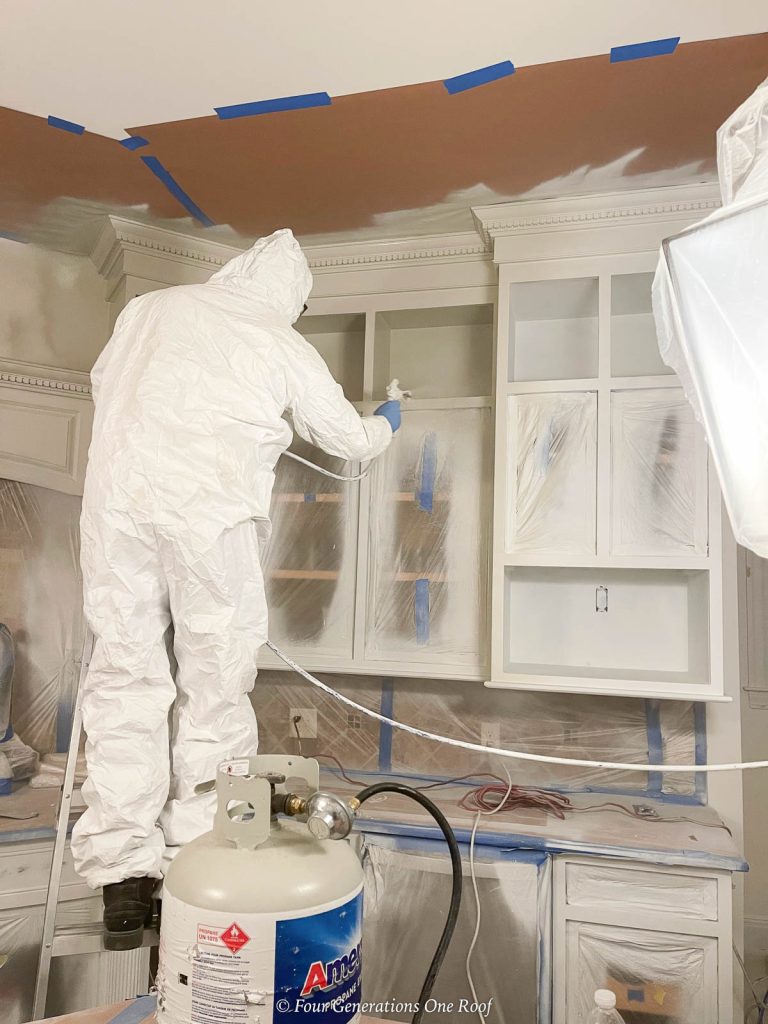
Create a dedicated spray area with excellent ventilation. Your garage with the door open works well, or set up outside on a calm day. Lay drop cloths everywhere—overspray travels farther than you think.
Build or buy paint stands to elevate cabinet doors off your work surface. Sawhorses with 2x4s create perfect drying racks. You’ll paint both sides without waiting for one side to dry, dramatically speeding up your project.
Set up adequate lighting from multiple angles. Shadows hide imperfections that become glaringly obvious once everything is installed. Professional painters use work lights positioned to create slight shadows that reveal any texture or runs.
Mask off cabinet boxes remaining in place using plastic sheeting and quality painter’s tape. The extra 30 minutes spent on thorough masking saves hours of cleanup and prevents paint where you don’t want it.
Spray Technique for Flawless Results
Hold your spray painter for cabinets 8-12 inches from the surface—closer causes runs, farther creates a rough texture. Keep the sprayer perpendicular to the surface and moving at a steady pace, about one foot per second.
Overlap each pass by 50% to ensure even coverage without stripes. Start spraying before you reach the cabinet and keep moving past the edge before releasing the trigger. This prevents heavy paint buildup at starts and stops.
Apply thin coats—multiple light coats beat one heavy coat every time. Heavy coats sag, drip, and take forever to dry. Three thin coats create a more durable finish than one thick coat anyway.
Work in a consistent pattern. For cabinet doors, many professionals spray the edges first, then tackle the flat surfaces in smooth horizontal passes from top to bottom. This prevents overspray from landing on wet paint.
Drying and Curing Time
Paint feels dry to the touch within hours, but full curing takes much longer. Wait at least 24 hours between coats, regardless of what the paint can says. Rushing this step causes wrinkling, poor adhesion, and soft spots.
Full cure time for cabinet paint typically runs 7-14 days. Yes, seriously. During this period, the paint gradually hardens to its final durability. Reinstall hardware carefully and avoid heavy use for the first week.
Temperature and humidity dramatically affect drying times. Ideal conditions are 70-80°F with 40-50% humidity. Cold temperatures slow curing, while high humidity can cause blushing (a cloudy appearance) in some paints.
Consider using a paint hardener additive like Penetrol or Floetrol. These products extend working time, reduce brush marks (yes, even with sprayers they help), and improve final hardness.
Best Paints to Use With Your Cabinet Sprayer
Oil-Based Enamels
Traditional oil-based paints deliver the hardest, most durable finish for cabinets. They level beautifully, leaving minimal texture, and stand up to daily wear better than any other option. Benjamin Moore Advance and Sherwin-Williams ProClassic represent the gold standard.
The downside? Strong odors, long drying times, and cleanup requires mineral spirits. You’ll need excellent ventilation, and the smell lingers for days. Many people find this tradeoff worthwhile for the superior durability.
Oil-based paints yellow slightly over time, especially in areas without natural light. This characteristic look works beautifully with cream and off-white colors but can be problematic for pure white cabinets.
Waterborne Alkyd Paints
These hybrid formulas combine oil-paint durability with water-based convenience. Sherwin-Williams ProClassic Waterborne and Benjamin Moore Advance cure incredibly hard while cleaning up with soap and water.
They flow almost as well as traditional oils, self-level nicely, and spray beautifully through HVLP systems. Drying time sits between traditional latex and oil-based paints—longer than latex but faster than oils.
Cost runs higher than standard latex, but the performance justifies the expense for kitchen cabinets. These paints resist yellowing better than oil-based products and maintain their color for years.
Acrylic Latex Cabinet Paint
Modern acrylic latex formulas designed specifically for cabinets have improved dramatically. Products like Behr Alkyd Enamel and PPG Break-Through offer surprising durability in a fast-drying, low-odor package.
These paints work exceptionally well with spray painters for cabinets because they thin easily and clean up quickly. You’ll finish your project faster and get back to using your kitchen sooner.
The final hardness doesn’t quite match oil-based or waterborne alkyds, but the gap has narrowed significantly. For bathrooms, bedrooms, and less-used spaces, premium acrylic latex performs beautifully.
Common Mistakes When Spray Painting Cabinets (And How to Avoid Them)
Insufficient Surface Preparation
Skipping the degreasing step causes the most heartbreaking failures. Paint that looks great initially begins peeling within weeks when applied over grease. Take the time to clean properly—your future self will thank you.
Inadequate sanding creates adhesion problems too. Those glossy factory-finished cabinets need roughing up before paint sticks permanently. Use a palm sander to save time on large flat areas, but hand-sand detailed trim and edges.
Forgetting to prime, or using cheap primer, ranks high on the mistake list. Quality bonding primers like Zinsser Cover Stain or Benjamin Moore Fresh Start cost more upfront but prevent expensive do-overs later.
Incorrect Sprayer Settings
Using the wrong tip size or spray pattern creates texture problems. Cabinet doors need finer tips than walls. Most cabinet spray painting projects work best with 1.5-2.0mm tips for HVLP systems.
Too much pressure causes excessive overspray and wastes paint. Start with low pressure and gradually increase until you get proper atomization. Each sprayer has a sweet spot—find it through testing before tackling your actual cabinets.
Spraying too quickly leaves thin, streaky coverage. Spraying too slowly causes runs and sags. Practice maintaining consistent speed and distance on cardboard or scrap wood until muscle memory kicks in.
Poor Environmental Conditions
Attempting to spray in extreme temperatures causes problems. Paint below 50°F or above 90°F, and you’ll fight viscosity issues, slow drying, and poor flow. Wait for ideal conditions even if it delays your project.
High humidity ruins finishes. Moisture in the air gets trapped under the paint surface, causing blushing, slow drying, and soft spots. Check weather forecasts and choose low-humidity days for spraying.
Dusty environments create orange-peel texture as particles land in wet paint. Clean your spray area thoroughly before starting. Some professionals even mist the floor with water to settle dust.
Rushing the Process
Applying coats too quickly prevents proper drying and causes problems. That perfect-looking first coat needs time to cure before the second coat goes on. Impatience leads to wrinkling, soft spots, and extended project timelines.
Reinstalling cabinets too soon damages the finish. Even though paint feels dry after 24 hours, it remains soft and easily damaged for the first week. Plan to keep your kitchen semi-functional during the full cure period.
Skipping the final sanding between coats leaves texture and imperfections. A light scuff with 320-grit sandpaper after each coat (except the final one) creates glass-smooth results.
Cost Analysis: DIY Spray Painting vs. Professional Cabinet Refinishing
DIY Spray Painting Budget
A quality spray painter for cabinets costs $100-$400 depending on the model and features. Add paint, primer, sandpaper, cleaning supplies, and miscellaneous items, and expect to invest $300-$700 total for an average-sized kitchen.
Your time investment matters too. Plan on 20-30 hours spread over 7-10 days for a typical 20-cabinet kitchen. This includes all prep work, spraying, drying time, and reinstallation. Experienced DIYers work faster, while first-timers might need more time.
The equipment becomes reusable for future projects. That $300 sprayer can handle fences, furniture, interior walls, and more. Spread across multiple projects, the per-project cost drops significantly.
| DIY Item | Estimated Cost |
|---|---|
| HVLP Spray System | $150-$400 |
| Paint (2-3 gallons) | $100-$200 |
| Primer (1 gallon) | $30-$50 |
| Sandpaper & Supplies | $30-$50 |
| Masking Materials | $20-$40 |
| Total DIY Cost | $330-$740 |
Professional Refinishing Costs
Professional cabinet refinishing typically runs $3,000-$8,000 for an average kitchen, depending on cabinet quantity, condition, and your location. High-end refinishers in major cities charge even more.
The advantages? Professionals complete the work in 3-5 days with guaranteed results. They handle all prep, spraying, and cleanup. If something goes wrong, they fix it at no additional cost.
You lose kitchen access during the process, which can be inconvenient. Some homeowners set up temporary kitchens in other rooms. The professional finish quality usually exceeds DIY results, especially for first-time cabinet painters.
Cabinet Replacement Costs for Comparison
New cabinet installation ranges from $8,000-$25,000+ for most kitchens. Custom cabinets push costs even higher. This makes spray painting existing cabinets attractive—you get a fresh look for a fraction of replacement cost.
Quality cabinets built 20+ years ago often feature better construction than modern budget options. Solid wood boxes and dovetail drawers justify refinishing rather than replacing. Save the good bones and update the appearance.
The environmental benefits matter too. Keeping functional cabinets out of landfills and reducing the resources needed for new manufacturing aligns with sustainable living principles.
Maintenance Tips for Spray-Painted Cabinets
Daily and Weekly Care
Clean spills immediately with a damp cloth. Letting substances sit on painted surfaces can stain or damage the finish. Cooking oils are particularly problematic—wipe them away quickly.
Use mild dish soap and water for regular cleaning. Harsh chemicals, abrasive cleaners, and scouring pads damage paint. Microfiber cloths work beautifully for both cleaning and drying without scratching.
Avoid excessive moisture. Don’t leave wet cloths sitting on cabinet surfaces. Wipe dry after cleaning to prevent water spots and potential paint softening.
Long-Term Protection
Apply furniture wax or cabinet polish every 3-6 months to protect the finish and make cleaning easier. Products like Howard Feed-N-Wax or Guardsman’s Cabinet Polish create a protective barrier against moisture and stains.
Watch for wear spots around handles and high-traffic areas. Touch these up promptly before damage spreads. Keep leftover paint for quick touch-ups—properly stored paint lasts years.
Consider adding felt pads inside cabinets where dishes and pots create friction. These inexpensive additions prevent premature wear on interior surfaces.
Touch-Up Techniques
Minor chips and scratches happen in kitchens. Keep a small artist’s brush and your leftover paint for quick repairs. Clean the damaged area, apply a thin coat, and feather the edges to blend with surrounding paint.
For larger damage, sand the affected area smooth, spot-prime if necessary, and carefully spray or brush on new paint. Blending new paint with old requires skill—practice on inconspicuous areas first.
Knowing when to repaint entirely versus touching up saves time and maintains appearance. If damage becomes widespread after 5-7 years, a full respray might make more sense than endless touch-ups.
Spray Painter Maintenance and Storage
Cleaning Your Equipment
Never let paint dry in your sprayer—this cannot be emphasized enough. Dried paint clogs passages, damages seals, and ruins your equipment permanently. Clean immediately after each use, even if you plan to spray again tomorrow.
For latex paints, flush the system with warm water until it runs clear. Add a drop of dish soap to cut any remaining paint residue. For oil-based paints, use the appropriate thinner (mineral spirits, paint thinner) following your sprayer’s instructions.
Run cleaning solution through the sprayer several times. Disassemble removable parts and clean them individually. Pay special attention to the nozzle tip where paint buildup occurs most readily.
Proper Storage
Store your cabinet spray painter in a climate-controlled environment. Extreme temperatures and humidity damage seals and electrical components. Keep it in its original case if possible to protect from dust and damage.
Apply a drop of light machine oil to moving parts before long-term storage. This prevents corrosion and keeps everything moving smoothly when you’re ready for your next project.
Store extra paint properly—seal cans tightly and keep them at moderate temperatures. Write the purchase date and project name on each can. Latex paint typically lasts 2-3 years stored properly, while oil-based paints last even longer.
Troubleshooting Common Issues
Sputtering spray pattern? Check for loose connections, insufficient paint in the reservoir, or a partially clogged nozzle. Clean the nozzle thoroughly and ensure all fittings are tight.
Uneven spray pattern indicates nozzle damage or buildup. Replace the nozzle if cleaning doesn’t solve the problem. Quality replacement nozzles cost $10-$30 and restore like-new performance.
Reduced pressure or volume suggests a clogged intake tube, dirty filters, or worn seals. Consult your manual for filter locations and replacement procedures. Most filters are inexpensive and easy to replace.
Real Project Results: Before and After Transformations
Case Study: 1980s Oak Kitchen Revival
Sarah from Michigan tackled her dated golden oak cabinets with a Wagner FLEXiO 590 sprayer. The entire project cost $485 including paint and supplies, compared to $6,200 quoted by professionals.
She chose Benjamin Moore Advance in White Dove, applying three coats over BIN shellac primer. Total time investment: 28 hours over 10 days. The transformation completely modernized her kitchen.
“The sprayer made all the difference,” Sarah reports. “I tried brushing cabinets in my last house, and the difference is night and day. The smooth, professional finish fooled my friends into thinking I’d replaced the cabinets entirely.”
Case Study: Rental Property Flip
Jake renovates rental properties and uses his Graco Magnum X7 on every kitchen project. He’s refinished over 50 kitchens in the past three years using the same sprayer.
Average cost per kitchen: $400-$500 in materials. Average time: 15-18 hours including prep and cleanup. This quick turnaround means properties return to rental status faster, improving his investment returns.
“Quality spray equipment pays for itself immediately in the rental business,” Jake explains. “Tenants want updated kitchens, but replacing cabinets destroys my profit margins. Spray painting delivers the fresh look they want at a cost that makes financial sense.”
Case Study: Farmhouse Kitchen Transformation
Michelle created her dream farmhouse kitchen by spray painting original 1950s cabinets. She used the HomeRight Super Finish Max with Sherwin-Williams ProClassic in Canvas Tan.
The vintage metal cabinets required special prep—she used a self-etching primer designed for metal surfaces. Three coats of paint created a durable, attractive finish that highlights the cabinets’ retro charm.
“Everyone told me to rip out these old metal cabinets, but I loved their character,” Michelle shares. “The spray painter for cabinets made it possible to keep them and still get a modern, updated look. Best $200 I’ve spent on the house.”
Equipment Recommendations by Budget
Budget-Friendly Options ($100-$150)
The HomeRight Finish Max and Wagner Control Spray Max offer surprising value for occasional users. These entry-level HVLP sprayers handle cabinets well when you follow proper technique and use properly thinned paint.
Limitations include slower coverage and less adjustability than premium models. Plan on adding 3-5 hours to your project timeline compared to professional equipment. The finish quality is good but requires more careful technique.
These models work brilliantly for first-time cabinet painters who want to test the waters without major investment. If you love the results and plan more projects, upgrade later and keep the budget model for smaller tasks.
Mid-Range Options ($150-$300)
The Wagner FLEXiO series and Earlex HV2901 occupy the sweet spot for serious DIYers. These sprayers feature better turbines, more adjustability, and improved durability while remaining affordable.
Expect professional-quality results with proper technique. These models handle any cabinet paint without thinning, adjust easily for different projects, and last through multiple kitchens with proper care.
This price range offers the best value for most homeowners. You get performance approaching professional-grade equipment without the premium price tag.
Professional-Grade Options ($300-$600)
For those tackling multiple projects or wanting the absolute best results, the Fuji Semi-PRO 2 and Graco 9.5 ProContractor deliver outstanding performance. These sprayers feature powerful motors, precise controls, and rock-solid reliability.
Professional painters use these daily for years without issues. The superior atomization creates flawless finishes with less effort. Adjustability lets you dial in perfect settings for any paint type and project.
The investment makes sense if you’re refinishing multiple rooms, planning ongoing DIY projects, or considering a side business in furniture refinishing or cabinet painting.
Safety Considerations When Spray Painting Indoors
Proper Ventilation Requirements
Spray painting generates significant airborne particles. Always work in well-ventilated areas with fresh air circulation. Open windows, use box fans to exhaust fumes, and maintain airflow throughout the workspace.
Never spray in enclosed spaces without proper ventilation. Paint fumes can cause headaches, dizziness, and respiratory issues. Some solvents are flammable, creating explosion risks in poorly ventilated areas.
Consider using respiratory protection even with good ventilation. A properly fitted N95 mask filters paint particles effectively for latex paints. For oil-based products, upgrade to a respirator with organic vapor cartridges.
Protective Equipment
Eye protection is mandatory—paint overspray drifts everywhere. Safety glasses or goggles prevent painful paint-in-eye incidents. Once paint mist gets in your eyes, the project stops until you flush them thoroughly.
Wear gloves to protect your hands from paint and solvents. Latex or nitrile gloves work for water-based paints. Use chemical-resistant gloves for oil-based products and cleaning solvents.
Long sleeves, long pants, and closed-toe shoes protect skin from overspray. That fine mist settles everywhere, including on exposed skin. Old clothes you don’t mind ruining are perfect for spray painting days.
Fire Safety Precautions
Many paints and solvents are highly flammable. Keep your spray area away from pilot lights, water heaters, furnaces, and other ignition sources. Don’t smoke anywhere near spray painting areas.
Store paint and solvents properly away from heat sources. Keep fire extinguishers readily accessible. Know how to use them before emergencies arise.
Dispose of paint-soaked rags carefully. Oil-based paints can spontaneously combust on rags as they cure. Spread them flat to dry outdoors or store in sealed metal containers filled with water until you can dispose of them properly.
Frequently Asked Questions About Spray Painters for Cabinets
What is the best spray painter for kitchen cabinets?
The Wagner FLEXiO 590 and Graco Magnum X5 consistently rank as top choices for DIY cabinet projects. These HVLP sprayers balance affordability with professional-quality results. For those wanting premium performance, the Fuji Semi-PRO 2 delivers exceptional atomization and finish quality. Choose based on your budget, project scope, and future painting plans.
Do I need to thin paint when using a spray painter for cabinets?
Most modern HVLP sprayers handle unthinned cabinet paint, but checking your specific paint and sprayer recommendations is essential. Water-based paints occasionally need 5-10% water added for optimal flow. Oil-based paints typically spray perfectly without thinning. Always test on cardboard first to verify proper consistency and spray pattern before starting your cabinets.
How many coats should I apply when spray painting cabinets?
Three coats of paint over one coat of primer creates the most durable finish for kitchen cabinets. Some dark colors covering light wood may need four coats for complete opacity. Wait 24 hours between coats for proper drying. Rushing this step causes soft spots, poor adhesion, and disappointing results that don’t hold up to daily use.
Can I spray paint cabinets without removing doors?
While technically possible, removing cabinet doors dramatically improves results and reduces masking time. Spraying doors flat on sawhorses eliminates runs and drips common when spraying vertical surfaces. You’ll achieve more even coverage and save time despite the extra work of removal. The professional appearance justifies the additional effort for most projects.
How long do spray-painted cabinets last?
Properly spray-painted cabinets using quality paint and correct technique last 10-15 years with normal use and proper maintenance. This longevity matches or exceeds brush-applied finishes. The key factors include thorough surface preparation, appropriate primer, quality cabinet-specific paint, and allowing full cure time before heavy use. Regular cleaning and prompt touch-ups extend life even further.
Is spray painting cabinets worth it compared to replacing them?
Absolutely. Spray painting cabinets costs $300-$700 for DIY projects versus $8,000-$25,000 for replacement. Even professional refinishing ($3,000-$8,000) costs substantially less than new cabinets. If your existing cabinets feature solid wood construction and good bones, refinishing makes excellent financial sense. You get a dramatic transformation for a fraction of replacement cost.
What type of paint works best with a spray painter for cabinets?
Waterborne alkyd paints like Benjamin Moore Advance and Sherwin-Williams ProClassic Waterborne deliver optimal results with spray equipment. These formulas combine oil-paint durability with water cleanup convenience. Traditional oil-based enamels also spray beautifully and provide maximum hardness. Premium acrylic latex cabinet paints work well for lower-use areas while offering fast drying times.
How do I prevent orange peel texture when spray painting cabinets?
Orange peel results from improper sprayer settings, incorrect distance, or environmental conditions. Maintain 8-12 inches from the surface, use proper paint viscosity, adjust pressure correctly, and ensure ideal temperature/humidity. Spraying too quickly or with too much pressure causes texture issues. Practice on scrap surfaces before tackling actual cabinets to dial in perfect technique.
Can I use a spray painter for cabinets on furniture and other projects?
Yes, quality cabinet sprayers excel at furniture refinishing, trim work, doors, fences, and small-to-medium painting projects. The versatility makes your investment more valuable. HVLP systems particularly shine on furniture requiring smooth, professional finishes. Store your equipment properly between projects, and one quality sprayer serves multiple purposes for years.
How much does a good spray painter for cabinets cost?
Budget-friendly options start around $100-$150, mid-range models run $150-$300, and professional-grade equipment costs $300-$600+. Most DIYers find excellent value in the $150-$300 range, where performance meets affordability. Consider your project scope and future plans when choosing. A quality sprayer pays for itself quickly compared to professional refinishing costs or cabinet replacement.
Where to Buy Your Spray Painter for Cabinets
Major home improvement retailers like Home Depot, Lowe’s, and Menards stock popular spray painter for cabinets models. Shopping in-store lets you see equipment firsthand and ask questions from knowledgeable staff. Many stores offer rental programs if you prefer trying before buying.
Online retailers including Amazon provide the widest selection and often the best prices. Read detailed reviews from verified buyers to understand real-world performance. Look for sellers offering easy returns in case the sprayer doesn’t meet your expectations.
Specialty paint stores like Sherwin-Williams and Benjamin Moore sometimes carry professional spray equipment. While prices run higher, the expert advice and equipment support can be invaluable, especially for first-time users.
For detailed reviews and comparisons of top-rated models, check out resources from FineHomeBuilding and This Old House to make an informed decision.
Ready to transform your kitchen with professional results? Investing in a quality spray painter for cabinets opens up endless possibilities for DIY home improvement. Whether you’re updating your own kitchen or tackling rental properties, the right equipment combined with proper technique delivers stunning results that rival professional refinishing at a fraction of the cost. Start planning your cabinet transformation today and discover how achievable that dream kitchen really is.
After completing your cabinet project, consider exploring other DIY transformations. If you’re interested in personal care projects with similar attention to detail, check out our guide on spray tan after care for maintaining professional results.