When it comes to insulating your home or commercial space, choosing the right materials can make or break your energy efficiency goals. Spray foam kit closed cell insulation has emerged as one of the most effective solutions for homeowners and contractors who want superior thermal performance and moisture resistance. Unlike traditional insulation methods, closed cell spray foam creates an airtight barrier that significantly reduces energy costs while adding structural integrity to your building.
This comprehensive guide will walk you through everything you need to know about spray foam kits, from understanding the science behind closed cell technology to selecting the perfect kit for your specific project. Whether you’re insulating a basement, sealing an attic, or tackling a commercial renovation, you’ll discover why closed cell spray foam has become the gold standard in modern insulation.
What Is Closed Cell Spray Foam Insulation?
Closed cell spray foam is a high-density insulation material that expands to create a rigid, impermeable barrier. Unlike open cell foam, which has tiny open pockets that allow air and moisture to pass through, closed cell foam features completely sealed cells that block both air infiltration and water vapor. This fundamental difference makes closed cell foam the superior choice for applications where moisture control is critical.
The foam consists of two chemical components that mix and react when sprayed. This reaction causes rapid expansion, typically at a ratio of 30:1 or less, creating a dense material with an R-value between 6.0 and 7.0 per inch. For comparison, traditional fiberglass insulation only achieves R-3.2 to R-3.8 per inch, meaning you need nearly twice as much fiberglass to match the insulating power of closed cell foam.
When you apply a spray foam kit closed cell product, you’re not just adding insulation—you’re creating a structural enhancement. The rigid foam bonds to framing members and sheathing, effectively increasing the racking strength of walls by up to 250%. This makes it an excellent choice for areas prone to high winds or seismic activity.
Key Benefits of Using Closed Cell Spray Foam Kits
Superior Thermal Performance
The thermal resistance of closed cell spray foam is unmatched in the insulation industry. With an impressive R-value of 6-7 per inch, you can achieve maximum insulation in minimal space. This becomes especially valuable in areas with limited cavity depth, such as cathedral ceilings or retrofit applications where you can’t afford to lose interior square footage.
According to the Department of Energy, properly installed closed cell foam can reduce heating and cooling costs by 30-50% compared to homes with traditional insulation. One case study from a Minnesota homeowner showed annual energy savings of $1,847 after replacing fiberglass with closed cell spray foam in a 2,400 square foot home. These savings compound over the decades-long lifespan of the foam.
The foam’s low thermal conductivity means heat transfer is dramatically reduced. In summer, outdoor heat struggles to penetrate your conditioned space. In winter, precious heated air stays where it belongs—inside your home. This consistent temperature regulation reduces HVAC runtime, extending equipment life while slashing utility bills.
Complete Air and Moisture Barrier
One of the most compelling reasons to choose a closed cell spray foam kit is its ability to serve triple duty as insulation, air barrier, and vapor retarder. Traditional insulation requires separate layers for each function, creating potential failure points and increasing labor costs. Closed cell foam accomplishes all three in a single application.
The foam’s impermeable nature means it achieves a permeance rating of less than 1.0 perm at 2 inches thickness, qualifying it as a Class II vapor retarder. At 3 inches or more, it becomes a Class I vapor retarder with exceptional moisture resistance. This prevents condensation within wall cavities, eliminating the conditions that lead to mold growth, wood rot, and structural damage.
Air sealing is equally critical for energy efficiency. Studies show that air infiltration accounts for 25-40% of heating and cooling energy loss in typical homes. Closed cell foam eliminates these leaks by sealing every crack, gap, and penetration. Blower door tests consistently show dramatic improvements in air tightness after spray foam installation, often achieving 0.5 air changes per hour or less.
Structural Reinforcement and Longevity
Beyond insulation, closed cell spray foam kits provide tangible structural benefits. The rigid foam adheres permanently to wood, metal, and masonry surfaces, creating a composite structure that resists lateral forces. Testing by the Spray Polyurethane Foam Alliance demonstrates that walls insulated with closed cell foam show 250% greater racking strength compared to conventionally insulated walls.
This structural enhancement proves invaluable in hurricane-prone regions and earthquake zones. Several post-disaster assessments have documented homes with spray foam insulation suffering significantly less damage than neighboring structures. The foam holds wall assemblies together even when fasteners fail, potentially saving lives and reducing reconstruction costs.
The longevity of closed cell foam is another major advantage. Unlike fiberglass that can settle, compress, or absorb moisture over time, properly installed closed cell foam maintains its full R-value and structural properties for the life of the building—typically 80+ years. The foam is dimensionally stable, resisting thermal expansion and contraction that degrades other materials. It won’t sag, settle, or require replacement, making it a true one-time investment in your building’s performance.
How to Choose the Right Spray Foam Kit Closed Cell
Coverage and Yield Calculations
Selecting the appropriate spray foam kit closed cell product starts with accurately calculating your coverage needs. Manufacturers rate kits by board feet—a board foot represents one square foot of coverage at one inch thickness. A 600 board foot kit, for example, will cover 600 square feet at 1 inch, 300 square feet at 2 inches, or 200 square feet at 3 inches.
Most applications require 2-4 inches of closed cell foam for optimal performance. To determine your needs, multiply the square footage of your project area by the desired thickness in inches. Add 10-15% extra to account for waste, overspray, and irregular surfaces. For a 500 square foot attic requiring 3 inches of foam, you’d need 1,500 board feet minimum, plus 150-225 board feet buffer.
Pay careful attention to the kit’s expansion ratio and density specifications. Quality closed cell foam kits produce foam with a density of 1.75-2.0 pounds per cubic foot. Lower density products may be marketed as closed cell but deliver inferior performance. Always verify the manufacturer’s published R-value per inch—it should be 6.0 or higher for true closed cell performance.
Temperature and Application Conditions
Environmental conditions dramatically impact spray foam performance. Closed cell spray foam kits require substrate temperatures between 60-90°F for proper adhesion and expansion. Both the chemicals and the surfaces you’re spraying must fall within this range. Cold substrates cause the foam to cure slowly or incompletely, resulting in poor adhesion and reduced R-value.
Ambient temperature and humidity also matter significantly. Most kits specify application temperatures of 70-80°F with relative humidity below 80%. High humidity can interfere with the chemical reaction, causing the foam to become friable or develop surface defects. Some manufacturers offer winter-grade formulations designed for application in temperatures as low as 40°F, though these typically cost 15-20% more.
Always check weather forecasts before starting your project. Rapid temperature swings during cure can cause foam to crack or separate from substrates. Plan to maintain stable temperatures for at least 24 hours after application. If working in unconditioned spaces during extreme weather, consider using temporary heating or cooling to create optimal conditions.
Kit Size and Component Quality
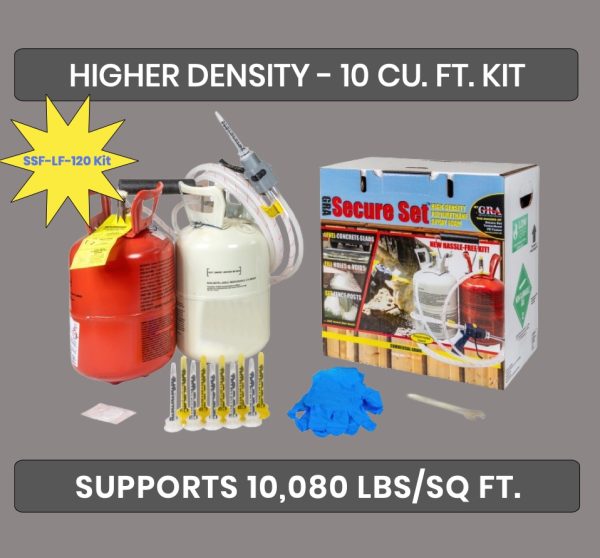
Spray foam kit closed cell products come in various sizes, from small 15-board-foot kits for minor repairs to massive 600+ board foot systems for whole-house applications. Smaller kits offer convenience and lower upfront costs but deliver higher per-board-foot prices. Large kits provide better value but require completion within the product’s working timeframe—typically 30 days after opening.
Component quality varies dramatically across brands. Premium kits feature all-metal tanks, professional-grade hoses rated for chemical resistance, and precision spray guns with adjustable fan patterns. Budget kits often substitute plastic components that can fail or deliver inconsistent spray patterns. The spray gun is particularly critical—a quality gun provides precise control over foam output and pattern, while cheap guns create mess and waste.
Look for kits that include comprehensive accessories: protective gloves, respirators, application guides, and cleaning supplies. The best manufacturers provide technical support hotlines and instructional videos. Read reviews carefully, focusing on feedback about kit completeness, component durability, and manufacturer support. A kit that costs 20% more but includes quality components and support will ultimately save money through reduced waste and better results.
Step-by-Step Application Guide for Spray Foam Kit Closed Cell
Surface Preparation and Safety Protocols
Proper surface preparation is absolutely essential for successful closed cell spray foam application. Begin by thoroughly cleaning all surfaces of dust, dirt, grease, and loose paint. Use a shop vacuum followed by compressed air to remove debris from cracks and crevices. Any contamination prevents proper adhesion, creating potential failure points where foam may separate from substrates over time.
Repair any damaged structural members before foam application. Replace rotted wood, secure loose framing, and ensure all surfaces are dry. Closed cell foam tolerates minimal moisture but shouldn’t be applied to wet or frost-covered surfaces. Use a moisture meter to verify wood moisture content below 19%. In basements or crawl spaces, address active water infiltration issues before insulating.
Safety cannot be overstated when working with spray foam chemicals. The isocyanate component is highly reactive and requires careful handling. Always work in well-ventilated areas or wear supplied-air respirators—not just dust masks. Full-face respirators with organic vapor cartridges provide minimum protection. Cover all skin with long sleeves, pants, and chemical-resistant gloves. Protect eyes with safety goggles or face shields. Keep a clear exit path and never work alone when applying spray foam.
Mixing and Application Techniques
Modern spray foam kit closed cell systems feature dual tanks with precisely formulated chemical ratios. Before beginning, warm tanks to the manufacturer’s specified temperature—typically 70-80°F. Shake tanks vigorously for 30-60 seconds to ensure proper mixing of settled components. Connect hoses securely and check for leaks before pressurizing the system.
Test spray onto cardboard or scrap material first. Properly mixed foam should expand evenly without discoloration, achieving full rise within 30-45 seconds. The texture should be uniform without bubbles or voids. If foam appears discolored, expands unevenly, or remains tacky after curing, check tank temperatures and mixing ratios. Adjust pressures according to manufacturer specifications—unbalanced pressure causes poor mixing and substandard foam.
Apply foam in multiple passes rather than attempting full thickness in one application. For cavities requiring 3 inches of foam, apply 1.5 inches, allow 5-10 minutes for initial cure, then apply the remaining thickness. This prevents overheating from excessive exothermic reaction and ensures complete cure throughout the foam mass. Maintain consistent gun distance of 18-24 inches from substrate and use smooth, overlapping passes to avoid thin spots or excessive buildup.
Curing Time and Post-Application Finishing
Closed cell spray foam achieves tack-free surface cure within 30-60 seconds, but full cure requires 24 hours. During this period, the foam continues to cross-link and achieve final physical properties. Avoid disturbing newly applied foam or exposing it to extreme temperatures during cure. Maintain space temperature within the application range until complete cure.
After full cure, trim excess foam using a serrated knife or foam saw. Cut flush with framing members for clean, professional results. Wear a dust mask when trimming—cured foam dust irritates respiratory passages. Collect trimmings promptly; they’re bulky and create mess if allowed to scatter. Dispose of foam waste according to local regulations—most jurisdictions allow disposal in regular trash once fully cured.
Complete your installation with appropriate thermal barriers where required by building codes. Most codes require spray foam to be covered with 15-minute thermal barrier material (typically 1/2-inch drywall) in occupied spaces. Exposed foam in attics, crawlspaces, and unoccupied areas may require ignition barriers—check local code requirements. Learn about protecting other areas like dealing with carpenter bees in foam as pest prevention is important in foam applications.
Comparing Top Brands of Closed Cell Spray Foam Kits
| Brand | Board Feet | R-Value/Inch | Density (PCF) | Price Range | Best For |
|---|---|---|---|---|---|
| Tiger Foam | 200-600 | 7.0 | 2.0 | $450-$1,800 | Professional results, complete kits |
| Foam It Green | 200-602 | 6.5 | 1.75 | $399-$1,699 | Budget-conscious DIYers |
| Touch ‘n Seal | 15-600 | 6.8 | 1.9 | $89-$1,649 | Versatile applications, various sizes |
| Great Stuff Pro | 200 | 6.5 | 1.8 | $525-$625 | Quick projects, ease of use |
| Spray Foam Kit | 200-600 | 7.0 | 2.0 | $475-$1,850 | High-performance applications |
Tiger Foam: Premium Performance and Support
Tiger Foam has established itself as the industry leader for DIY and professional spray foam kit closed cell applications. Their kits consistently receive top ratings for foam quality, component durability, and customer support. The company offers comprehensive training videos, technical support, and responsive customer service that guides users through every step of the application process.
Tiger Foam kits produce dense, high-quality foam with an impressive R-7.0 per inch rating. The tanks include built-in temperature gauges to ensure optimal application conditions. Professional-grade spray guns provide precise control with adjustable fan patterns from pencil-point to 3-inch wide. All hoses and connections use commercial-quality fittings that resist chemical degradation and ensure leak-free operation throughout the kit’s working life.
Price-wise, Tiger Foam occupies the premium segment but justifies the cost through superior yield, consistent quality, and comprehensive support. Users report minimal waste and excellent adhesion across various substrate types. The company’s commitment to customer success is evident in their detailed application guides and willingness to troubleshoot any issues that arise during use.
Foam It Green: Value Without Compromise
Foam It Green delivers excellent performance at competitive pricing, making it ideal for cost-conscious DIYers tackling significant projects. Their closed cell kits produce quality foam with R-6.5 per inch thermal resistance and proper 1.75 PCF density. While slightly lower-rated than premium options, the performance difference is negligible in real-world applications.
The company offers some of the best value in the industry, with 602 board foot kits often priced $100-200 below comparable competitors. Components are solid if not quite as refined as premium brands—plastic tank valves instead of metal, adequate spray guns that lack fine adjustment features. For one-time projects or users who prioritize budget over ultimate refinement, Foam It Green represents an excellent compromise.
Customer reviews consistently praise Foam It Green’s foam quality and coverage accuracy. The company provides good documentation and responsive email support, though phone support can be limited during peak seasons. Their kits work reliably when users follow instructions carefully and maintain proper application temperatures.
Touch ‘n Seal: Versatility and Size Options
Touch ‘n Seal distinguishes itself through the most comprehensive product lineup in the industry. From tiny 15-board-foot kits for spot repairs to massive 600-board-foot systems, they offer a size for every project. This flexibility helps users avoid over-purchasing while ensuring adequate supply for completion. Their closed cell foam achieves R-6.8 per inch with 1.9 PCF density—excellent specifications for residential and light commercial use.
The mid-range pricing makes Touch ‘n Seal accessible to most budgets without sacrificing quality. Kit components are well-designed and durable, featuring comfortable spray guns with trigger locks for extended use and reinforced hoses that resist kinking. The company includes comprehensive instructions with each kit and maintains detailed FAQ sections on their website addressing common application challenges.
Touch ‘n Seal’s reputation for consistency makes it popular among contractors who need reliable results across multiple projects. The foam cures uniformly, adheres well to varied substrates, and maintains published R-values. For users seeking proven performance at fair prices with excellent size flexibility, Touch ‘n Seal delivers outstanding value.
Real-World Applications and Case Studies
Basement Waterproofing Success Story
A homeowner in Portland, Oregon faced chronic basement moisture issues despite multiple attempts with traditional waterproofing methods. After researching solutions, they selected a 600-board-foot closed cell spray foam kit to insulate and seal the basement walls. The project covered 1,200 square feet of concrete foundation walls with 2 inches of foam, creating both thermal barrier and vapor retarder.
The results exceeded expectations. Basement relative humidity dropped from 75% to 45% within weeks of installation. Energy bills decreased by $87 monthly—over $1,000 annually. Most impressively, the musty odor that plagued the basement disappeared completely. Follow-up testing confirmed no mold growth and dramatically improved air quality. The homeowner calculated a payback period of 4.5 years through energy savings alone, not accounting for prevented moisture damage and improved comfort.
This case demonstrates closed cell foam’s unique ability to solve multiple problems simultaneously. The foam created a continuous insulation layer eliminating thermal bridging through concrete. It sealed countless small cracks and imperfections in the foundation that allowed air and moisture infiltration. Most importantly, it provided permanent moisture control without ongoing maintenance or replacement concerns.
Attic Conversion Project
A New Jersey family wanted to convert their unfinished attic into livable space but faced challenges with limited rafter depth and extreme temperature swings. Traditional insulation wouldn’t provide adequate R-value within the 2×6 rafter bays. They chose a spray foam kit closed cell solution, applying 4 inches of foam to achieve R-28 insulation value—exceeding code requirements while preserving headroom.
The transformation was remarkable. Previously unbearable summer heat became manageable with minimal air conditioning. Winter temperatures stayed comfortable without supplemental heating. Sound transmission from outside reduced noticeably—a welcome benefit for the family’s home office. Blower door testing showed the attic space achieved 0.3 air changes per hour, qualifying for Energy Star certification.
Total project cost including foam kits, safety equipment, and finishing materials came to $3,400 for 800 square feet. Professional installation quotes ranged from $6,500-$8,200 for equivalent work. The DIY approach saved over $3,000 while delivering professional-grade results. The family gained 600 square feet of conditioned living space valued at approximately $90,000 in their market—an exceptional return on a weekend’s work and modest material investment.
Commercial Retrofit Achievement
A small manufacturing facility in Michigan needed to reduce heating costs in their 4,000 square foot metal building. The existing fiberglass insulation had compressed and deteriorated, leaving the building drafty and expensive to heat. Management authorized a closed cell spray foam retrofit, applying 3 inches to exterior walls and 4 inches to the roof deck.
First-year energy savings totaled $12,847—a 47% reduction in heating costs. Consistent temperatures throughout the facility improved worker comfort and productivity. The company measured 8% productivity gains attributed to better working conditions. Product quality improved as temperature-sensitive manufacturing processes achieved better control. Within 18 months, energy savings completely repaid the $21,500 installation cost.
Secondary benefits emerged over time. The building envelope became virtually maintenance-free—no insulation replacement or air sealing work required. Dust infiltration decreased dramatically, reducing cleaning requirements. The foam added noticeable structural rigidity to the metal building, reducing movement and rattling during high winds. Management considers the spray foam retrofit one of their best facility investments, delivering ongoing returns year after year.
Common Mistakes to Avoid with Spray Foam Kits
Inadequate Surface Preparation
The single most common failure point in spray foam kit closed cell applications is insufficient surface preparation. Many DIYers underestimate how critical clean, dry, properly prepared surfaces are for lasting adhesion. Foam applied over dusty surfaces may appear successful initially but can delaminate months or years later as the weak bond fails under thermal stress.
Take the time to thoroughly clean every surface. Remove all loose paint, especially in older homes where multiple paint layers may exist. Scrape away rust from metal surfaces and prime if necessary. In new construction, vacuum framing lumber to remove sawdust and debris. This preparation takes time but absolutely determines the long-term success of your insulation investment. A few extra hours of prep work prevents failures that could require complete foam removal and reapplication.
Moisture is equally problematic. Never apply closed cell foam to wet or damp surfaces regardless of the foam’s moisture resistance once cured. The chemical reaction requires proper surface conditions to achieve good adhesion. Use moisture meters to verify wood moisture content and allow damp areas to dry completely before application. In basements and crawlspaces, address water infiltration issues first—spray foam is not a waterproofing solution for active leaks.
Incorrect Application Temperature
Temperature management represents another frequent source of problems with closed cell spray foam kits. Both tank temperature and substrate temperature must fall within the manufacturer’s specified range—typically 70-80°F. Cold tanks produce foam that expands slowly, cures improperly, and achieves lower R-values. Cold substrates prevent proper adhesion and can cause foam to pull away as it cures and contracts slightly.
Many users make the mistake of starting projects on cold mornings without properly warming tanks. Chemical reactions are temperature-dependent; even 10 degrees below optimal can significantly impact foam quality. Store tanks in heated spaces overnight before use. In cold weather, some applicators wrap tanks in blankets with hot water bottles or use tank warming blankets available from foam suppliers. These precautions ensure consistent, quality results regardless of ambient conditions.
Conversely, excessive heat causes problems too. Tanks exposed to direct sunlight or stored in hot vehicles can overheat, increasing pressure to dangerous levels and accelerating the chemical reaction. This produces foam that expands too rapidly, creating large cells, reducing density, and lowering R-value. Always store tanks in shaded, temperature-controlled locations and monitor gauges before application.
Overapplication and Waste
Inexperienced users frequently waste significant foam through overapplication—spraying thicker layers than needed or covering unnecessary areas. Remember that closed cell foam is expensive compared to other insulation types. Each wasted board foot directly impacts your project budget. Learning proper application technique pays dividends through reduced material costs and better results.
Apply foam in multiple thin passes rather than single thick applications. This approach provides better control, prevents overheating from excessive exothermic reaction, and ensures complete cure throughout the foam mass. For cavities requiring 3-4 inches of foam, plan on 2-3 passes with brief waiting periods between applications. This technique consistently produces superior foam quality compared to attempting full thickness in one pass.
Practice before tackling your main project. Most kits include enough material for some test spraying—use it! Practice on cardboard or scrap wood until you achieve consistent, controlled application. Learn how the gun responds, how far the foam expands, and how different surfaces affect adhesion. These few minutes of practice prevent costly mistakes and give you confidence for the actual application. Every contractor started as a beginner; the difference between good and poor results is taking time to develop proper technique.
Cost Analysis: DIY vs Professional Installation
Breaking Down Material and Equipment Costs
Understanding the true cost of DIY spray foam kit closed cell installation requires comprehensive accounting of all expenses. A 600-board-foot kit from reputable manufacturers runs $1,600-$1,800. This covers 200 square feet at 3 inches depth—adequate for a medium-sized room or partial attic. Add safety equipment for first-time users: quality respirator ($150-$250), protective suit ($30-$50), gloves ($15-$25), and safety glasses ($15-$30).
Additional supplies include surface preparation materials, cleaning supplies for equipment, and often supplemental foam for edge details and hard-to-reach areas. Budget approximately $200-$300 for these ancillaries. Total first-project costs typically range from $2,000-$2,400 for materials and safety equipment. Subsequent projects cost less as safety equipment and experience carry forward, reducing cost per square foot significantly.
Compare this to professional installation quotes of $3.50-$7.00 per square foot for closed cell foam. For the same 200 square feet requiring 3 inches of foam, professional costs range from $700 to $1,400. However, this represents installed pricing with no equipment purchases or learning curve. For single small projects, professional installation may cost less when factoring time value and equipment investment. For larger projects or multiple applications, DIY provides substantial savings.
Calculating Long-Term Value and ROI
The financial case for spray foam kit closed cell insulation extends far beyond installation costs. Energy savings provide ongoing returns that compound over decades. According to Energy Star, proper insulation upgrades typically reduce heating and cooling costs by 15-30%. A home with $2,400 annual HVAC costs could save $360-$720 annually through strategic spray foam application.
Payback periods for DIY projects average 3-6 years depending on climate, existing insulation levels, and energy costs. In extreme climates with high energy rates, payback can occur in as little as 2 years. Professional installation extends payback to 5-10 years but still represents positive ROI. Unlike many home improvements, insulation continues providing returns indefinitely—30, 40, even 50+ years of reduced energy costs.
Consider additional value factors beyond energy savings. Homes with superior insulation command premium prices in real estate markets, with studies showing 3-5% higher sale prices for energy-efficient homes. Improved comfort reduces reliance on HVAC systems, extending equipment life by years. Moisture control prevents costly structural damage and mold remediation. Better indoor air quality reduces health issues and associated costs. When accounting for all benefits, closed cell spray foam represents one of the highest-return investments available to homeowners.
Time Investment and Learning Curve
DIY closed cell spray foam installation requires significant time investment, especially for first-time users. Surface preparation alone can consume 4-8 hours for a typical room. Application time varies with project complexity and user experience—expect 1-2 hours per 100 board feet for beginners, improving to 30-45 minutes with experience. Cleanup and finishing add another 2-4 hours.
The learning curve is real but manageable. Most users report feeling comfortable with the process after 15-30 minutes of actual application. The equipment becomes intuitive, proper spray technique develops quickly, and confidence builds as quality foam consistently results from careful attention to instructions. Online videos provide excellent visual guides, and manufacturer support helps troubleshoot issues as they arise.
Contrast this with professional installation that’s completed in 4-8 hours for whole-house applications. Professionals bring experience that prevents mistakes and optimizes coverage. However, scheduling can delay projects by weeks, and working around contractor schedules creates inconvenience. DIY projects proceed on your timeline, allowing work during weekends or evenings without disrupting household routines. For many homeowners, this flexibility coupled with substantial cost savings makes the time investment worthwhile despite the learning curve.
Maintenance and Long-Term Performance
Durability and Stability Over Time
One of the most compelling attributes of spray foam kit closed cell insulation is its exceptional longevity. Unlike fiberglass insulation that settles, compresses, and loses R-value over 10-15 years, properly installed closed cell foam maintains full thermal performance for 50-80+ years. The rigid cellular structure doesn’t sag or settle, and the foam remains bonded to substrates through temperature cycles and minor building movement.
Field studies of buildings insulated with closed cell foam in the 1980s and 1990s show minimal degradation even after 40+ years. Core samples from these installations reveal foam that has maintained density, cell structure, and thermal resistance properties virtually unchanged from initial installation. This dimensional stability is unique among insulation types and contributes significantly to long-term value. You install closed cell foam once and enjoy its benefits for the life of the building.
The foam’s resistance to moisture, insects, and rodents further ensures longevity. Unlike cellulose or fiberglass that can harbor pests or grow mold when exposed to moisture, closed cell foam provides no food source or habitat for biological organisms. Termites cannot eat through it, mice and rats cannot nest in it, and mold cannot grow on it. This biological resistance eliminates maintenance concerns that plague other insulation types and prevents the degradation that necessitates replacement.
Inspection and Performance Monitoring
Closed cell spray foam requires minimal ongoing maintenance, but periodic inspection ensures continued optimal performance. Annually inspect visible foam surfaces for any signs of damage, separation, or deterioration. Look particularly at transitions between foam and other materials—areas where different materials meet are most susceptible to movement and potential separation. Check for cracks, gaps, or separation that could compromise air sealing performance.
Monitor your energy usage through utility bills to verify continued efficiency. Sudden increases in heating or cooling costs may indicate problems with your building envelope, though such issues rarely stem from foam itself. More commonly, problems arise from new air leaks around windows, doors, or mechanical penetrations added after foam installation. Conduct annual blower door tests if you want quantitative performance verification—these tests quickly identify any new air leakage paths.
In conditioned spaces, ensure that thermal barriers (drywall or other code-required coverings) remain intact and properly installed. Building codes require exposed spray foam in occupied areas to be covered for fire safety. Regular inspection confirms no damage has occurred that exposes foam to potential ignition sources. In unconditioned spaces like attics where foam remains exposed, visual inspection suffices to verify foam condition and identify any issues requiring attention.
Addressing Damage and Making Repairs
When damage does occur to spray foam kit closed cell installations, repairs are straightforward with small kits designed specifically for touch-ups and patches. Common damage sources include accidental mechanical impacts, building modifications that cut through foam, or settlement-related cracks in older buildings. Small 15-board-foot kits provide convenient, cost-effective solutions for these minor repairs without investing in full-sized systems.
To repair damaged closed cell foam, first remove any loose or damaged material. Clean the repair area thoroughly, ensuring surfaces are dry and free of debris. Apply new foam in thin layers, feathering the edges to blend with existing foam. Allow each layer to cure before applying additional material. Properly executed repairs are virtually invisible and restore full thermal and air-sealing performance to the affected area.
For larger damage or significant foam areas requiring replacement, carefully cut out damaged sections using a serrated knife or foam saw. Extend cuts slightly beyond visible damage to ensure complete removal of compromised material. Prepare exposed surfaces as you would for new construction, then apply fresh foam following standard application techniques. These repairs bond permanently to existing foam and substrates, creating continuous insulation and air barrier properties across the entire assembly.
Environmental Considerations and Building Codes
VOC Emissions and Indoor Air Quality
Modern closed cell spray foam kits have evolved significantly regarding environmental impact and indoor air quality. During application and cure, spray foam releases volatile organic compounds (VOCs) from the chemical reaction. These emissions peak during application and decline rapidly as the foam cures. Most quality closed cell foams achieve low or zero VOC off-gassing within 24-48 hours after application.
Proper ventilation during application is essential for applicator safety and to prevent VOC accumulation. Maintain cross-ventilation or use exhaust fans to evacuate chemical vapors from the workspace. After application, ventilate the space for 24 hours minimum before reoccupying. Some sensitive individuals may prefer 48-72 hour ventilation periods. Once fully cured, closed cell foam is inert and does not continue releasing significant VOCs into indoor air.
Third-party certifications provide assurance of indoor air quality safety. Look for foam kits with GREENGUARD Gold or similar certification verifying low chemical emissions. These certifications require rigorous testing proving the product meets strict chemical emission limits for use in sensitive environments like schools and healthcare facilities. Reputable manufacturers provide safety data sheets (SDS) and emission data transparently, allowing informed decisions about product selection.
Code Compliance and Fire Safety
Building codes regulate spray foam insulation installation to ensure fire safety and structural performance. Most jurisdictions require closed cell foam in occupied spaces to be covered with approved thermal barriers—typically 15-minute rated materials like 1/2-inch drywall. This requirement prevents foam exposure to ignition sources and slows fire spread. In attics, crawlspaces, and other unoccupied areas, codes may allow exposed foam or require less robust ignition barriers.
Spray foam kit closed cell products carry fire ratings indicating their performance in standardized tests. Look for flame spread ratings of 25 or less and smoke development ratings of 450 or less—these values allow the foam to be used in most residential and commercial applications. Some premium foams include fire-retardant additives that improve fire resistance beyond standard formulations. Always verify your selected product meets local code requirements before beginning your project.
Permitting requirements vary by jurisdiction and project scope. Many localities require building permits for spray foam installation, particularly in occupied spaces or when modifying structural assemblies. Contact your local building department to determine permit requirements and inspection schedules. Professional installers handle permitting routinely, but DIY users must navigate this process independently. Permit fees typically range from $50-$200 and require inspection of completed work to verify code compliance.
Energy Code Requirements and Incentives
Energy codes increasingly mandate minimum insulation R-values based on climate zone and building type. The International Energy Conservation Code (IECC) and similar standards establish these requirements, which are adopted with modifications by state and local jurisdictions. Closed cell spray foam’s high R-value per inch makes achieving code compliance easy even in limited cavity depths where other insulation types fall short.
Many regions offer financial incentives for energy-efficiency improvements including spray foam insulation. Federal tax credits may cover 10-30% of material costs for qualifying projects. State and utility programs provide rebates ranging from $0.10-$0.50 per square foot for insulation upgrades meeting efficiency thresholds. These incentives can reduce effective project costs by $200-$1,000+, improving ROI and shortening payback periods significantly.
Research available incentives before purchasing materials—some programs require pre-approval or specific documentation. Utility companies often provide free energy audits identifying optimal improvement areas and quantifying expected savings. These audits help target spray foam applications where they’ll deliver maximum impact. Combine multiple incentive programs when possible; federal tax credits, state rebates, and utility incentives can often be stacked for maximum financial benefit. Proper documentation of all work ensures you receive all available incentives and support.
Frequently Asked Questions About Spray Foam Kit Closed Cell
What is the difference between closed cell and open cell spray foam?
Closed cell spray foam features sealed cells that prevent air and moisture passage, offering R-6 to R-7 per inch insulation value and serving as both insulation and vapor barrier. Open cell foam has open pockets that allow air and moisture passage, providing R-3.5 per inch insulation. Close cell foam is denser (1.75-2.0 PCF vs 0.4-0.5 PCF), more expensive, and provides structural reinforcement that open cell cannot match.
How much does a spray foam kit closed cell cost?
Quality spray foam kit closed cell products range from $89 for small 15-board-foot repair kits to $1,850 for large 600-board-foot systems. Mid-sized 200-board-foot kits typically cost $450-$625. Price per board foot decreases with larger kits—600-board-foot kits average $2.75-$3.10 per board foot while smaller kits may exceed $5.00 per board foot. Professional installation costs $3.50-$7.00 per square foot installed.
Can I apply closed cell spray foam myself?
Yes, modern spray foam kits closed cell are designed for DIY application with proper preparation and safety equipment. Success requires following manufacturer instructions carefully, maintaining proper application temperatures, using appropriate personal protective equipment, and preparing surfaces thoroughly. First-time users should practice application technique before tackling main projects and consider starting with smaller areas to build confidence and skill.
How long does closed cell spray foam last?
Properly installed closed cell spray foam lasts 50-80+ years without losing R-value or performance. Unlike fiberglass that settles or cellulose that can absorb moisture, closed cell foam maintains dimensional stability and thermal resistance indefinitely. Field studies of 40+ year old installations show minimal degradation. The foam’s resistance to moisture, pests, and biological growth ensures longevity that equals or exceeds the building’s structural life.
What R-value does closed cell spray foam provide?
Closed cell spray foam delivers R-6.0 to R-7.0 per inch of thickness, the highest R-value per inch of any common insulation material. This means 3 inches of closed cell foam provides R-18 to R-21 insulation value, exceeding code requirements in most climate zones. The high R-value per inch makes closed cell foam ideal for applications with limited cavity depth where achieving code-required R-values with other materials would be impossible.
Does spray foam kit closed cell require special equipment?
Spray foam kits closed cell include all necessary application equipment: tanks, hoses, and spray gun. Users must provide safety equipment including respirators (supplied-air or full-face with organic vapor cartridges), protective suits or clothing, chemical-resistant gloves, and safety glasses. Surface preparation tools (vacuum, air compressor, cleaning supplies) and finishing tools (serrated knife, saw) are also needed. Initial equipment investment for safety gear ranges from $200-$350.
Can closed cell spray foam be used in basements?
Yes, closed cell spray foam is excellent for basement applications. It provides superior thermal insulation while serving as vapor barrier preventing moisture infiltration through foundation walls. The foam seals all cracks and gaps eliminating air leakage and preventing musty odors. Two inches of closed cell foam creates an effective vapor barrier and meets most energy code requirements. Always address active water leaks before applying foam—it prevents moisture infiltration but doesn’t stop active water flow.
Is spray foam safe after it cures?
Fully cured closed cell spray foam is inert and safe for occupied spaces. During application and cure (24-48 hours), the foam releases VOCs requiring ventilation and proper safety equipment. After complete cure, quality closed cell foams with GREENGUARD or similar certification meet strict chemical emission standards. The cured foam does not support mold growth, does not provide food for pests, and does not off-gas harmful chemicals during normal use.
Take Action: Start Your Insulation Upgrade Today
Upgrading your home or building with spray foam kit closed cell insulation represents one of the smartest investments you can make. The combination of superior thermal performance, air sealing, moisture control, and structural reinforcement delivers benefits that compound over decades. Whether you’re tackling a basement retrofit, attic conversion, new construction, or commercial project, closed cell spray foam provides unmatched long-term value.
Don’t let another season pass with high energy bills, uncomfortable temperatures, and moisture concerns. Modern DIY spray foam kits closed cell make professional-grade insulation accessible to any motivated homeowner or contractor. With proper preparation, quality materials, and attention to detail, you can achieve results that rival professional installations at a fraction of the cost.
Research your specific needs, calculate required coverage accurately, and select a quality kit from a reputable manufacturer. Invest in proper safety equipment and take time to prepare surfaces thoroughly. Your diligence during installation ensures decades of superior performance, energy savings, and comfort. The work you do today will continue delivering returns for generations—true value that few home improvements can match.
Ready to transform your building’s energy efficiency and comfort? Explore our comprehensive selection of spray foam kit closed cell products and find the perfect solution for your project. With industry-leading support, quality materials, and proven results, you’re just one weekend away from dramatically improved insulation performance. Start your project today and join thousands of satisfied DIYers who’ve discovered the power of closed cell spray foam insulation.
Sources: U.S. Department of Energy – Energy Efficiency and Renewable Energy Division, Spray Polyurethane Foam Alliance (SPFA), International Energy Conservation Code (IECC), GREENGUARD Environmental Institute