When you’re standing in the paint aisle staring at dozens of spray paint options, lacquer spray paint often catches your eye with promises of professional-grade finishes and quick-drying formulas. But what makes this type of paint different from the rest, and more importantly, is it the right choice for your specific project? Whether you’re refinishing furniture, touching up automotive parts, or working on a craft project, understanding the unique properties of lacquer-based aerosols can mean the difference between a finish that looks professionally done and one that leaves you disappointed.
In this comprehensive guide, we’ll break down everything you need to know about lacquer spray paint, from its chemical composition to real-world applications, so you can make informed decisions and achieve the stunning results you’re after.
What Makes Lacquer Spray Paint Different From Other Finishes?
Lacquer spray paint stands apart from traditional enamels, acrylics, and urethanes in some pretty significant ways. At its core, lacquer is a fast-evaporating solvent-based finish that dries through evaporation rather than oxidation or chemical curing. This fundamental difference in how it dries affects everything from application technique to final durability, and understanding these distinctions will help you choose the right product for your needs.
The chemical composition of lacquer-based spray paint typically includes nitrocellulose or acrylic resins dissolved in powerful solvents like acetone, toluene, or xylene. When you spray it onto a surface, these solvents evaporate incredibly quickly—often within minutes—leaving behind a hard, smooth film. This rapid drying time is both a blessing and a challenge, allowing for quick recoating but also requiring swift, confident application techniques to avoid runs, drips, or uneven coverage.
One of the most distinctive characteristics of lacquer finishes is their ability to “melt” into previous coats. Unlike enamel paints that cure into separate layers, each new coat of lacquer spray paint partially redissolves the coat beneath it, creating a single unified finish rather than a stack of individual layers. This property makes lacquer exceptionally easy to repair and refinish—you can simply spray over damaged areas without worrying about adhesion issues between old and new paint. However, it also means that lacquer can potentially lift or wrinkle incompatible undercoats, so surface preparation and primer selection become critically important.
The Advantages That Make Lacquer Spray Paint a Professional Favorite
Professional finishers and serious DIY enthusiasts consistently reach for lacquer spray paint for specific reasons that go beyond simple convenience. The speed advantage alone can transform your workflow—where enamel paints might require hours between coats, lacquer often allows recoating within 15-30 minutes. For projects with tight deadlines or when you’re working in a limited time window, this rapid turnaround can be invaluable.
The finish quality achievable with spray lacquer paint rivals professional spray equipment in many applications. Modern aerosol formulations deliver exceptionally fine atomization, producing smooth, glass-like surfaces without brush marks or roller stipple. The self-leveling properties of lacquer help eliminate minor application imperfections, and the hard, durable film resists scratches and wear better than many alternative finishes. According to industry testing, properly applied lacquer finishes can achieve gloss levels exceeding 90% on a 60-degree meter, matching or surpassing the shine of freshly polished automotive clearcoats.
Repairability represents another significant advantage of lacquer-based aerosol paint. Because new lacquer chemically bonds with existing lacquer layers, you can spot-repair scratches, chips, or damage without creating visible patch marks or halos. This characteristic makes lacquer particularly valuable for maintaining vintage items, musical instruments, and furniture pieces where perfect color matching and invisible repairs are essential. Professional guitar refinishers almost exclusively use lacquer for this reason—a damaged area can be repaired and blended seamlessly without refinishing the entire instrument.
Here are the key benefits that set lacquer apart:
- Lightning-fast dry times enabling same-day project completion
- Superior flow and leveling for professional-looking surfaces
- Excellent clarity and depth that enhances wood grain and colors
- Easy repair and touch-up without visible patch marks
- Hard, durable finish resistant to scratches and chemicals
- Exceptional gloss retention that stays shiny for years
- Versatile compatibility with most primers and substrates
Best Applications for Lacquer Spray Paint
Lacquer spray paint truly shines in specific applications where its unique properties provide distinct advantages over other finishing options. Understanding where lacquer performs best will help you select the right product for your project and achieve results that meet or exceed your expectations.
Furniture Refinishing and Restoration
Furniture projects represent the sweet spot for spray lacquer applications. Whether you’re updating a thrift store find, restoring a family heirloom, or building custom pieces from scratch, lacquer delivers that showroom-quality finish that makes furniture look professionally done. The quick-drying formula means you can apply multiple coats in a single afternoon, and the hard finish stands up to daily use without showing wear prematurely. Mid-century modern furniture enthusiasts particularly favor lacquer for its ability to replicate the original finishes on vintage pieces from the 1950s and 1960s, when lacquer was the industry standard for quality furniture.
Cabinet refinishing has become increasingly popular as homeowners seek to update their kitchens without the expense of full replacements. Lacquer spray paint offers an ideal solution for this application—the fast dry time minimizes kitchen downtime, the durable finish withstands daily cleaning and use, and the professional appearance rivals factory-finished cabinets. One case study from a professional refinisher in Portland showed that kitchen cabinets finished with quality lacquer aerosols maintained their appearance and gloss for over eight years with normal use and cleaning, while similar cabinets finished with latex paint showed significant wear and dulling within three years.
Automotive and Motorcycle Applications
The automotive world has long relied on lacquer finishes, and modern automotive lacquer spray paint continues this tradition with improved durability and easier application. While professional auto body shops typically use two-part urethane systems for full vehicle refinishing, lacquer aerosols excel at smaller repair work, custom detailing, and restoration projects. Classic car enthusiasts working on vehicles from the 1960s and earlier often choose lacquer to maintain period-correct finishes that match the original factory application methods.
Custom motorcycle builders particularly appreciate how lacquer spray paint allows for creative techniques like candy colors, metal flake effects, and multi-stage finishes. The fast dry time enables complex layering techniques without extended wait times between steps, and the ability to wet-sand and buff lacquer to mirror finishes makes it ideal for show-quality paint jobs. According to motorcycle customizer Danny “The Count” Koker, featured on the television show “Counting Cars,” lacquer remains his preferred finish for custom builds because “nothing buffs out quite like lacquer—you can achieve depths of color and clarity that other paints just can’t match.”
Crafts, Models, and Detailed Work
For hobbyists and crafters, lacquer spray paint offers precision and quality that elevates projects from amateur to professional-looking. Model builders appreciate the thin, even coats possible with lacquer aerosols, which preserve fine details without obscuring panel lines or small features. The quick dry time allows for efficient production of multiple pieces, and the chemical bonding between coats eliminates the risk of paint lifting during masking and remasking for multi-color schemes.
Arts and crafts applications benefit from the wide color range and special effects available in lacquer-based spray paints. Metallic finishes, pearl effects, candy colors, and color-shifting formulas in lacquer provide options simply not available in other paint types. The hard, glossy finish also makes lacquer ideal for items that will be handled frequently—decorative boxes, picture frames, sculptural pieces, and functional craft objects all benefit from lacquer’s durability and beauty.
How to Apply Lacquer Spray Paint for Professional Results
Getting exceptional results with lacquer spray paint requires understanding proper technique and avoiding common mistakes that can ruin an otherwise perfect project. While lacquer is forgiving in many ways, its fast-drying nature demands confidence and correct methodology from the first spray to the final coat.
Surface Preparation: The Foundation of Great Finishes
The single most important factor in achieving professional results with lacquer spray paint is thorough surface preparation. No amount of expensive paint or perfect technique can overcome poor prep work—the old woodworking adage “prep is everything” holds especially true for lacquer applications. Start by thoroughly cleaning your surface to remove all dirt, grease, wax, and contaminants that could prevent proper adhesion. For furniture and wood projects, use mineral spirits or denatured alcohol on a clean cloth, wiping thoroughly and allowing complete drying before proceeding.
Sanding creates the mechanical tooth that helps lacquer spray paint grip the surface. For previously finished pieces, use 220-grit sandpaper to scuff the existing finish until it feels uniformly dull—you’re not trying to remove the old finish completely, just roughen it enough for the new paint to grab. For bare wood, start with 150-grit to smooth the surface, then progress to 220-grit for final smoothing. Always sand in the direction of the wood grain, and vacuum or tack-cloth the surface thoroughly after sanding to remove all dust particles.
Priming becomes essential when working with certain substrates or when significant color changes are involved. Use a lacquer-compatible primer that won’t be lifted or wrinkled by the strong solvents in your topcoat. Many professional finishers prefer shellac-based primers like Zinsser B-I-N because shellac is compatible with virtually everything and provides excellent sealing and adhesion properties. For metal projects, use a dedicated metal primer to prevent rust and ensure proper adhesion of subsequent lacquer coats.
Application Technique: Mastering the Spray
Proper spraying technique separates amateur results from professional-looking finishes when using lacquer spray paint. Start by shaking the can vigorously for at least two minutes after you hear the mixing ball rattling—inadequate shaking leads to color inconsistencies and poor coverage. Test spray on cardboard or scrap material to ensure the paint is flowing correctly and the spray pattern is even and consistent.
Hold the can 8-12 inches from your surface and maintain this distance throughout your passes. Moving too close causes runs and heavy application, while spraying too far away results in dry, rough texture as the paint begins drying before it reaches the surface. Use smooth, overlapping passes with 50% overlap between each stroke, keeping the can moving at a consistent speed. The cardinal rule of lacquer spray application: keep it moving! Stopping your motion while spraying guarantees runs and sags.
Apply multiple thin coats rather than attempting to achieve full coverage in one or two heavy applications. With lacquer spray paint, three to four light coats will always produce better results than one or two heavy coats. Light coats dry faster, level better, and significantly reduce the risk of runs and sags. Wait 15-30 minutes between coats, testing with a gentle finger touch on an inconspicuous area—if the surface feels dry to the touch and doesn’t show a fingerprint, it’s ready for the next coat.
Pro Application Tips:
- Temperature matters: Apply lacquer in temperatures between 60-85°F for optimal flow and drying
- Humidity control: Avoid spraying in high humidity (over 85%) which can cause blushing and milky finishes
- Ventilation is critical: Always work in well-ventilated areas—lacquer solvents are powerful and potentially harmful
- Dust-free environment: Minimize airborne dust that can settle into wet lacquer and ruin the finish
- Practice first: Test your technique on scrap material before tackling your actual project
Top Brands and Products in the Lacquer Spray Paint Market
The lacquer spray paint market offers numerous options at various price points, but quality varies significantly between brands. Choosing the right product for your specific application can mean the difference between a finish that delights you and one that disappoints, so understanding which brands deliver consistent quality and which formulations work best for different projects becomes essential knowledge.
Premium Professional-Grade Options
Mohawk Finishing Products represents the gold standard in professional wood finishing lacquers. Used by furniture manufacturers, restoration specialists, and professional refinishers worldwide, Mohawk’s lacquer aerosols deliver exceptional clarity, durability, and color accuracy. Their Tone Finish lacquers are specifically formulated to match common wood species, while their clear lacquers provide the ultimate in depth and gloss. Professional furniture refinishers often report that Mohawk products allow them to achieve finishes indistinguishable from factory-applied finishes, with gloss retention lasting years beyond competing products.
Deft Clear Wood Finish offers professional-quality lacquer spray paint specifically designed for wood applications at a more accessible price point. Their brushing lacquer aerosol provides the same finish characteristics as professional spray equipment but in a convenient can. According to woodworking expert Bob Flexner, author of “Understanding Wood Finishing,” Deft lacquers “provide excellent clarity and build quickly, making them ideal for both production work and careful restoration projects.” The semi-gloss and gloss formulations offer flexibility for different aesthetic preferences, and the consistent quality across batches ensures color matching remains reliable.
Consumer-Grade Quality Options
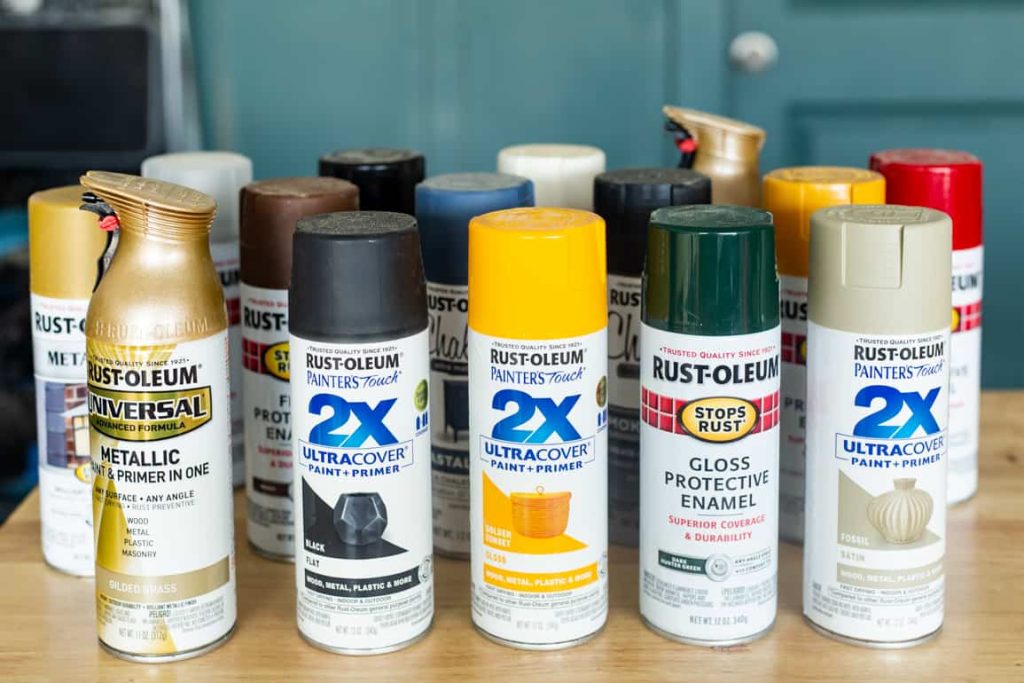
Rust-Oleum Universal Metallic spray paint uses an advanced lacquer-based formula that delivers both durability and stunning metallic effects. Available in a wide range of contemporary metallic shades, these lacquer aerosols work on virtually any surface including wood, metal, plastic, and masonry. The any-angle spray technology allows inverted spraying for hard-to-reach areas, and the comfort tip reduces finger fatigue during extended spraying sessions. DIY enthusiasts consistently rate these products highly for their ease of use and professional-looking results on furniture and décor projects.
Krylon ColorMaster represents solid mid-range quality in lacquer-based spray paints with excellent color selection and reliable performance. Their quick-dry formula allows recoating in minutes, and the EZ Touch fan spray nozzle provides consistent spray patterns with minimal hand fatigue. While not matching the absolute clarity and depth of premium professional products, Krylon delivers very good results for most furniture, craft, and general-purpose applications at an affordable price point. Consumer product testing shows Krylon lacquers maintain gloss and color for 3-5 years in typical indoor applications.
| Brand | Price Range | Best For | Dry Time | Durability Rating |
|---|---|---|---|---|
| Mohawk | $$$ | Professional refinishing | 15 min | Excellent (5/5) |
| Deft | $$ | Wood projects | 20 min | Very Good (4.5/5) |
| Rust-Oleum | $$ | Metallic effects | 20 min | Very Good (4/5) |
| Krylon | $ | General purpose | 15 min | Good (3.5/5) |
| Dupli-Color | $$ | Automotive | 30 min | Excellent (4.5/5) |
Lacquer vs. Enamel vs. Acrylic: Choosing the Right Finish
Understanding how lacquer spray paint compares to other finish types helps you select the optimal product for each specific project. While lacquer excels in many applications, alternative finishes sometimes offer advantages that make them better choices depending on your priorities, working conditions, and performance requirements.
Speed and Convenience Comparison
Lacquer spray paint dominates in the speed category with dry-to-touch times of 10-30 minutes and recoat times of 15-30 minutes. This rapid turnaround enables completing multi-coat projects in a single work session, a significant advantage when time constraints or project deadlines loom. Enamel paints, by contrast, typically require 1-2 hours between coats and may need 24 hours for full hardness, extending simple projects across multiple days. Acrylic spray paints fall somewhere in the middle with recoat times around 30-60 minutes, offering moderate speed without the harsh solvents of lacquer.
The convenience factor extends beyond drying speed to include repair and maintenance capabilities. Lacquer’s ability to chemically bond with previous coats makes touch-ups and repairs significantly easier than with enamel or acrylic finishes. A damaged area on a lacquer-finished piece can be spot-repaired without visible repair lines or color mismatches, while similar damage to enamel finishes often requires sanding back to the substrate and complete refinishing of the affected panel to achieve invisible repairs.
Durability and Chemical Resistance
While lacquer spray paint provides excellent hardness and scratch resistance, enamel finishes often surpass lacquer in chemical resistance and overall durability in harsh environments. Two-part catalyzed enamels create cross-linked molecular structures that resist chemicals, heat, and UV exposure better than lacquer’s evaporative film. For outdoor applications, garage floors, or items exposed to harsh chemicals and solvents, enamel finishes typically outperform lacquer significantly.
Water-based acrylic spray paints offer environmental advantages with lower VOC emissions and easier cleanup, but generally cannot match the hardness and clarity of lacquer finishes. Acrylics work well for craft projects, children’s furniture, and applications where lower toxicity is prioritized over ultimate durability. Professional finishing consultant Andy Charron notes that “acrylics have improved dramatically in recent years, but for furniture and cabinets that see daily use, lacquer still provides superior long-term durability and appearance retention.”
Application Environment Considerations
Lacquer spray paint requires excellent ventilation due to its powerful solvent content, making it less suitable for apartment dwellers or those without access to outdoor spray areas or professional spray booths. The strong odors and potentially harmful vapors necessitate proper respiratory protection and adequate air movement. Acrylic and water-based alternatives produce significantly less odor and pose fewer health risks, making them more practical for indoor use in residential settings with limited ventilation.
Temperature and humidity sensitivity also factor into finish selection decisions. Lacquer aerosols perform best in moderate temperatures (60-85°F) and low-to-moderate humidity, becoming problematic in very hot or humid conditions where blushing (milky appearance) can occur. Enamel paints tolerate a wider temperature range but cure slowly in cold conditions, while water-based acrylics can be applied in cooler temperatures but should not be used in freezing conditions where water content might cause problems.
Safety Considerations When Working With Lacquer Spray Paint
Working safely with lacquer spray paint requires understanding and respecting the potential hazards associated with solvent-based finishes. While modern formulations have reduced some risks compared to older lacquer products, the strong solvents necessary for lacquer’s fast-drying properties demand careful handling and appropriate safety measures.
Respiratory Protection and Ventilation
The most critical safety concern when using lacquer spray paint involves protecting your respiratory system from solvent vapors and atomized paint particles. The fine mist created by aerosol application contains both solid paint particles and volatile organic compounds (VOCs) that can cause both immediate and long-term health effects. Short-term exposure can cause dizziness, headaches, nausea, and respiratory irritation, while repeated long-term exposure may result in more serious health consequences.
Always use an appropriately rated respirator when applying lacquer-based finishes—a simple dust mask provides no protection against chemical vapors. Look for respirators rated for organic vapors (typically marked with an “OV” cartridge rating or color-coded with black cartridges). Half-face respirators with replaceable cartridges offer reliable protection for most DIY and professional applications, while full-face respirators provide additional eye protection from overspray. According to OSHA guidelines, any work with solvent-based spray finishes in enclosed areas requires either supplied-air respiratory protection or approved organic vapor respirators with fresh cartridges.
Ventilation amplifies the effectiveness of personal respiratory protection. Whenever possible, apply lacquer spray paint outdoors in open air, or in a garage with doors fully open and fans providing cross-ventilation. If you must work indoors, use multiple box fans to create strong air movement that draws fresh air in from one side of your work area and exhausts paint-laden air out the opposite side. Professional spray booths incorporate filtered intake and exhaust systems that provide continuous air changes, but even simple fan-enhanced ventilation dramatically reduces vapor concentrations and improves working conditions.
Fire Safety and Proper Storage
Lacquer spray paint contains highly flammable solvents that create serious fire hazards during application and storage. The aerosol nature of these products means you’re creating clouds of atomized flammable liquid mixed with air—essentially an explosive mixture that can ignite from even small ignition sources. Never spray lacquer near open flames, pilot lights, running electric motors, or any source of sparks. Water heaters, furnaces, and other gas appliances with pilot lights present particular dangers, as their pilots may be located where you don’t immediately see them.
Static electricity can provide sufficient ignition energy to trigger fires when working with lacquer aerosols, particularly in dry winter conditions. Ground yourself before spraying by touching a grounded metal object, and avoid wearing synthetic fabrics that generate static charge. If working in a spray booth, ensure proper grounding of all equipment. Some professional finishers wear anti-static wristbands connected to grounding points to eliminate static discharge risks entirely.
Storage of lacquer spray paint requires attention to both fire safety and product preservation. Store aerosols in cool, dry locations away from heat sources and direct sunlight—temperatures above 120°F can cause cans to rupture or explode. Never store spray paint in vehicles, attics, or other locations subject to temperature extremes. Keep lacquer products away from oxidizers, acids, and other incompatible chemicals. Professional shops maintain dedicated flammable storage cabinets that meet fire code requirements, a worthwhile investment for anyone maintaining substantial quantities of spray finishes.
Troubleshooting Common Problems With Lacquer Spray Paint
Even experienced finishers occasionally encounter problems when working with lacquer spray paint, but understanding common issues and their solutions helps you rescue projects that seem headed for disaster. Most lacquer problems stem from application errors, environmental factors, or incompatible substrate preparation rather than defects in the paint itself.
Runs, Sags, and Orange Peel
Runs and sags in lacquer finishes typically result from applying coats too heavily or holding the spray can too close to the surface. The fast-drying nature of lacquer means you have only seconds to correct application errors before the paint begins to set. If you notice a run developing, resist the temptation to immediately try to brush it out or respray it—this usually makes matters worse. Instead, let the run dry completely (typically 30-60 minutes), then carefully sand it level with 400-grit sandpaper followed by 600-grit, and apply additional coats over the repaired area.
Orange peel texture—a bumpy, dimpled surface resembling citrus fruit skin—occurs when lacquer spray paint particles begin drying before they flow together on the surface. This problem typically stems from spraying too far from the surface, working in excessively hot conditions, or using old paint with partially clogged nozzles. Prevention involves maintaining proper spray distance (8-12 inches), working in moderate temperatures, and cleaning spray nozzles between coats. If orange peel does occur, allow the finish to cure completely, then wet-sand with progressively finer sandpapers (800, 1000, 1500, 2000-grit) and buff with polishing compound to achieve a smooth, glossy surface.
Blushing and Milky Finishes
Blushing—a milky, cloudy appearance in the lacquer finish—happens when moisture becomes trapped in the film during application, typically in humid conditions. As the fast-evaporating solvents cool the surface, atmospheric moisture condenses on and within the wet lacquer, creating the characteristic hazy appearance. Minor blushing sometimes disappears as the finish cures completely, but more severe cases require correction.
Professional finishers use specialized lacquer retarder products that slow drying time slightly, preventing the rapid solvent evaporation and surface cooling that causes blushing. If blushing has already occurred, you can sometimes correct it by lightly misting the affected area with retarder, which redissolves the top layer of lacquer and allows trapped moisture to escape. For stubborn cases, carefully sand away the blushed layer and reapply lacquer spray paint in better conditions—ideally below 70% relative humidity and in moderate temperatures.
Adhesion Problems and Peeling
When lacquer spray paint fails to adhere properly and peels or chips easily, the problem usually traces back to inadequate surface preparation or incompatible primer choices. Lacquer applied over silicone-contaminated surfaces, incompatible primers, or insufficiently cleaned substrates will exhibit poor adhesion regardless of application technique. Furniture polish residue, particularly products containing silicone, creates invisible barriers that prevent proper bonding.
Testing adhesion before committing to your final finish helps avoid disappointment. Apply lacquer spray paint to an inconspicuous area and allow it to cure for 24 hours, then firmly press a piece of masking tape onto the finish and pull it off sharply. If paint lifts with the tape, you have an adhesion problem that requires resolving before proceeding. Solutions might include more thorough cleaning with solvent, applying a sealing primer like shellac, or completely removing the previous finish down to bare substrate.
Advanced Techniques: Getting the Most From Lacquer Spray Paint
Once you’ve mastered basic lacquer spray paint application, advanced techniques allow you to achieve effects and finishes that truly set your work apart. These professional methods require practice and patience but open up creative possibilities that elevate projects from competent to exceptional.
Color Sanding and Buffing for Mirror Finishes
The pinnacle of lacquer finishing is the hand-rubbed, mirror-like surface achieved through color sanding and buffing. This process involves wet-sanding the cured finish with progressively finer abrasives, then machine or hand-buffing with polishing compounds to achieve phenomenal depth and clarity. While time-consuming, the results justify the effort—properly executed, this technique produces finishes that rival or exceed factory spray booth results.
Start by applying at least 4-6 coats of lacquer spray paint, allowing each coat to dry completely and providing 24-48 hours after the final coat for full curing. Using a sanding block and wet-dry sandpaper, begin with 800-grit wet-sanding, keeping the surface continuously wet and using light, even pressure. You’ll notice the glossy finish becoming uniformly dull—this is correct. Progress through 1000, 1500, and 2000-grit papers, each step removing the scratches from the previous grit. After 2000-grit sanding, the surface should feel glass-smooth though appear completely dull.
Buffing restores and enhances the gloss using rubbing compound followed by polishing compound. Apply compound to a foam pad or buffing wheel and work in small sections using moderate pressure and speed. Professional automotive painter Kevin Tetz recommends “keeping the buffer moving constantly and letting the compound do the work rather than applying heavy pressure, which can burn through the finish on edges.” The transformation from dull to mirror-like occurs dramatically as you buff, revealing depth and clarity that standard spray application cannot achieve.
Tinting and Custom Color Matching
Creating custom colors by tinting clear lacquer spray paint provides unlimited color possibilities beyond standard aerosol offerings. While this technique requires some trial and error, it enables perfect color matches for restoration work or completely unique custom finishes. Universal tinting pigments designed for lacquer systems can be carefully added to clear lacquer, creating custom colors that maintain lacquer’s desirable properties.
Professional refinishers often maintain a collection of lacquer aerosols in primary and secondary colors, using careful layering techniques to achieve custom hues. Spraying a light coat of one color followed by a semi-transparent coat of another creates depth and color variation impossible to achieve with single-stage finishes. This technique, borrowed from automotive custom painting, works particularly well with metallic and pearl lacquer spray paints, where layered application creates multi-dimensional color effects.
Grain Filling and High-Build Finishing
Open-grained woods like oak, mahogany, and walnut present challenges for achieving glass-smooth finishes with lacquer spray paint alone. The large pores in these woods create tiny valleys that telegraph through thin finish coats, preventing the perfectly smooth surface required for high-gloss work. Professional-grade grain fillers solve this problem by filling the wood pores before finish application, creating a perfectly flat substrate for lacquer coats.
Apply grain filler according to manufacturer directions, typically forcing it into the wood pores with a putty knife or plastic squeegee, then wiping across the grain to remove excess while leaving the pores filled. After drying and light sanding, the wood surface feels uniformly smooth. Subsequent coats of lacquer spray paint build a finish over this prepared surface without the pores telegraphing through, enabling the mirror finishes possible with closed-grain woods. This technique is essential for any fine furniture work where ultra-smooth, high-gloss finishes are desired on open-grained species.
Environmental Impact and Eco-Friendly Alternatives
The environmental considerations surrounding lacquer spray paint deserve honest discussion, as traditional solvent-based lacquers contain high levels of volatile organic compounds (VOCs) that contribute to air pollution and potential health effects. Understanding these impacts and available alternatives helps you make informed choices that balance performance requirements with environmental responsibility.
VOC Content and Air Quality Concerns
Traditional lacquer spray paint formulations contain significant VOC levels, typically ranging from 400-600 grams per liter, with some products exceeding 700 g/L. These solvents evaporate during application and curing, releasing organic compounds into the atmosphere where they contribute to ground-level ozone formation and smog. According to the EPA, VOCs from architectural coatings and aerosol products represent substantial contributors to air quality problems in urban areas, prompting increasingly strict regulations in many jurisdictions.
California’s Air Resources Board (CARB) has established some of the nation’s strictest VOC limits for consumer products, effectively banning many traditional lacquer aerosols from sale in California. These regulations have spurred manufacturers to develop compliant formulations with reduced VOC content, though performance sometimes suffers compared to traditional products. If you live in regulated areas, check product labels for CARB compliance statements to ensure you’re purchasing legally available products.
Lower-VOC and Water-Based Alternatives
Modern water-based lacquer alternatives have improved dramatically in recent years, offering performance that approaches traditional solvent-based lacquers while dramatically reducing VOC emissions and health hazards. Products like General Finishes High Performance Water-Based Topcoat provide durability and clarity that rivals solvent lacquer, with VOC levels below 275 g/L and much easier cleanup using soap and water. While purists argue that water-based products cannot quite match the depth and clarity of traditional lacquer, the gap has narrowed considerably.
Some manufacturers now offer low-VOC lacquer spray paint formulations that balance environmental compliance with traditional lacquer characteristics. These products use modified resin systems and alternative solvents to achieve VOC reductions of 30-50% while maintaining fast dry times and good clarity. While not as dramatic an improvement as water-based alternatives, these reduced-VOC lacquers provide a middle ground for finishers who need traditional lacquer performance in regulated markets.
If you’re looking for additional protective options for different projects, consider exploring alternatives like line x spray for heavy-duty protective coatings on trucks and industrial applications, though these polyurethane-based products serve very different purposes than decorative lacquer finishes.
Cost Analysis: Is Premium Lacquer Spray Paint Worth It?
Understanding the true cost of lacquer spray paint projects requires looking beyond the per-can price tag to consider coverage, durability, and long-term performance. While premium products cost more upfront, they often deliver better value through superior coverage, easier application, and extended service life.
Price Ranges and Coverage Considerations
Budget lacquer spray paints typically retail for $4-7 per can, mid-range products cost $8-12 per can, and premium professional-grade options run $15-25 or more per can. At first glance, the premium products seem excessively expensive—three times the cost or more versus budget alternatives. However, coverage and build characteristics often favor the premium products substantially.
A typical 12-13 ounce aerosol of premium lacquer spray paint covers approximately 15-20 square feet per coat, while budget alternatives might cover only 10-12 square feet per coat with the same can size. The better atomization and higher solids content of premium products means you need fewer cans for equivalent coverage. For a medium-sized furniture project requiring 4 coats and covering roughly 25 square feet, budget lacquer might require 10 cans ($50-70) while premium lacquer needs only 6-7 cans ($90-150). The cost difference narrows considerably when coverage factors are included.
Long-Term Performance and Refinishing Costs
The durability advantage of premium lacquer spray paints significantly impacts long-term costs. A quality professional-grade finish might maintain its appearance and require no refinishing for 8-10 years or more in typical indoor applications, while budget products might show wear requiring refinishing after 3-5 years. The labor and material costs of premature refinishing can exceed the initial savings from choosing budget products multiple times over.
Professional refinisher Sarah Richardson, who operates a furniture restoration business in North Carolina, tracked actual project costs over three years using different lacquer spray paint quality levels. Her data showed that pieces finished with premium products (Mohawk and Deft) averaged 15% higher initial material costs but showed zero warranty work or customer complaints about durability. Conversely, pieces finished with budget lacquers to save costs averaged 22% lower initial material expenses but generated warranty refinishing work on approximately 12% of completed pieces—more than offsetting the initial savings when labor costs were factored in.
Cost Comparison Example (6-drawer dresser):
| Product Tier | Cans Needed | Material Cost | Coverage (sq ft) | Expected Durability | Total Cost/Year |
|---|---|---|---|---|---|
| Budget | 12 | $72 | 144 | 3-4 years | $18-24 |
| Mid-Range | 9 | $99 | 162 | 5-6 years | $16-20 |
| Premium | 7 | $140 | 140 | 8-10 years | $14-17 |
Where to Buy Quality Lacquer Spray Paint
Finding reliable sources for lacquer spray paint can significantly impact both project success and cost-effectiveness. Different retailers offer varying product selections, pricing, and expertise levels that affect your purchasing decisions and ultimate project outcomes.
Big Box Home Improvement Stores
Home Depot and Lowe’s carry respectable selections of lacquer spray paint products focused primarily on consumer and light professional applications. You’ll typically find Rust-Oleum, Krylon, and other mainstream brands in various colors and finishes, with prices generally competitive though not always the lowest available. The primary advantage of big box retailers is convenience—extended hours, numerous locations, and easy returns make them practical choices for weekend DIYers and those new to finishing work.
The expertise level at big box stores varies considerably, with knowledgeable staff being the exception rather than the rule. Don’t expect detailed technical advice about lacquer application techniques or product selection guidance beyond what’s printed on the can label. However, these stores excel at stocking commonly needed items and providing straightforward purchasing experiences. Look for sales and bulk pricing—buying multiple cans often triggers percentage discounts or special pricing that improves cost-effectiveness significantly.
Professional Paint and Finishing Supply Stores
Dedicated paint supply stores and finishing specialty shops provide access to professional-grade lacquer spray paints unavailable through consumer retail channels. Stores like Sherwin-Williams commercial locations, professional woodworking suppliers, and finishing specialty retailers stock brands like Mohawk, Behlen, and other premium products. The per-can prices typically run higher than consumer alternatives, but the performance advantages often justify premium costs for serious projects.
The expertise available at specialty finishing suppliers represents their most valuable asset beyond product selection. Staff members at these businesses often have decades of finishing experience and can provide invaluable advice about product selection, application techniques, and troubleshooting specific problems. When facing challenging projects or working with valuable pieces where mistakes carry significant costs, the guidance available from knowledgeable specialty retailers can prevent expensive errors that dwarf any price premium paid for products.
Online Retailers and Direct Purchasing
Amazon, specialty finishing websites, and manufacturer direct purchasing options provide the widest product selection and often the most competitive pricing for lacquer spray paint. Online shopping enables easy price comparison across multiple suppliers and access to product reviews from actual users. Bulk purchasing options often provide substantial per-can savings—buying full cases (typically 6-12 cans) versus individual cans can reduce costs by 20-40% in many cases.
The primary drawback of online purchasing involves shipping costs and hazmat fees associated with aerosol products. Many carriers classify lacquer aerosols as hazardous materials requiring special handling and documentation, adding $20-40 or more in fees per shipment. These fees make small orders uneconomical, but larger bulk purchases that spread hazmat fees across many cans often deliver the best overall pricing. Calculate total delivered cost including all fees before committing to online orders—what appears cheapest may not be after shipping and hazmat charges are included.
Rockler Woodworking, Woodcraft Supply, and similar specialty online retailers offer middle-ground options combining specialty product access with reasonable shipping costs and occasional free shipping promotions. Their curated selections focus on quality products that work well, eliminating much of the guesswork involved in choosing from Amazon’s overwhelming variety of options. Sign up for email lists to receive notification of sales and promotions that can deliver significant savings on lacquer spray paint purchases.
Specialty Effects and Creative Applications
Beyond standard solid color applications, lacquer spray paint enables specialty effects and creative techniques that elevate projects from ordinary to extraordinary. Understanding these advanced options expands your creative possibilities and allows you to tackle projects that demand unique visual characteristics.
Metallic and Pearl Effects
Metallic lacquer spray paints contain actual metal flakes suspended in the lacquer base, creating finishes that shift and shimmer as viewing angles change. Unlike cheap metallic enamels that look flat and dull, quality metallic lacquers achieve depth and richness rivaling automotive custom finishes. The key to exceptional metallic results lies in maintaining consistent spray distance and overlap—inconsistent application creates light and dark areas where metal flake orientation varies, producing a blotchy, unprofessional appearance.
Pearl and interference lacquer finishes use mica particles coated with metal oxides to create color-shifting effects that change dramatically with viewing angle and lighting conditions. These sophisticated finishes work particularly well over dark base coats where the color shift shows most dramatically. Professional custom painter Jon Kosmoski, known for his award-winning motorcycle finishes, notes that “pearl lacquers over black create some of the most dramatic effects possible—colors that appear deep purple from one angle shift to blue or green from another, creating finishes that literally stop people in their tracks.”
Layering techniques multiply creative possibilities with metallic and pearl lacquer spray paints. Applying a metallic base coat, followed by translucent candy color lacquer, then sealed with clear lacquer creates depth effects impossible to achieve any other way. The metal flakes reflect light from beneath the colored layer, creating a “lit from within” appearance that appears three-dimensional. This technique requires patience—each layer must dry completely before the next application—but the results justify the time investment.
Crackle, Texture, and Distressing Effects
While smooth, glass-like finishes represent the traditional goal with lacquer spray paint, intentional texture effects create aged, weathered, or artistic appearances suitable for shabby chic furniture, vintage-style décor, and art pieces. Crackle finishes—fine networks of random cracks throughout the finish—occur naturally when lacquer is applied over certain incompatible bases that expand and contract at different rates than the lacquer topcoat.
Intentional crackle effects can be achieved using specialized crackle base coats applied before lacquer spray paint topcoats. The base coat remains slightly flexible while the lacquer topcoat cures hard and brittle, creating controlled cracking as the base layer moves beneath the rigid lacquer. Heavier lacquer application produces larger, more dramatic cracks, while light coats create fine, delicate craze patterns. Rubbing antiquing glaze or dark wax into the cracks emphasizes the effect and adds an aged, weathered character.
Distressing techniques combined with lacquer finishes create convincing aged appearances on new pieces. Apply lacquer in your desired color, allow full curing, then use sandpaper, steel wool, or mechanical distressing tools to wear through the finish in areas that would naturally show wear—edges, corners, drawer pulls, and other high-contact points. Applying dark wax or antiquing glaze over the distressed finish, then wiping it back so it remains only in worn areas and crevices, completes the aged appearance. Many furniture makers use this technique to create “reproduction antiques” that convincingly mimic aged pieces.
Multi-Color Layering and Fades
Gradient effects and color fades achieved with lacquer spray paint create contemporary, artistic finishes popular in modern furniture and decorative arts. The fast-drying nature of lacquer enables rapid color changes without extended waiting between applications, and the chemical bonding between coats ensures perfect blending without delamination issues. Start by masking off sections or using natural blending techniques to transition smoothly from one color to another.
The “two-tone” furniture trend—pieces with contrasting colors on different elements—becomes easily achievable with lacquer aerosols. Paint the body in one color, mask it thoroughly with tape and paper, then apply a contrasting color to drawer fronts, doors, or other accent areas. The hard, chemical-resistant nature of cured lacquer allows aggressive masking tape adhesion without finish damage, enabling crisp, professional-looking color breaks. Remove masking tape promptly after the final coat while the paint remains slightly soft for the cleanest edges.
Ombré effects—gradual fades from one color to another or from color to clear—represent more advanced techniques requiring practice but delivering stunning results. Start with your darkest color at the bottom, then progressively lighten each successive coat by reducing paint application or mixing with clear lacquer. Professional artist Sarah Hamilton, who creates custom ombré furniture pieces, recommends “working in many thin layers rather than trying to achieve the fade in just a few coats—patience creates the smoothest, most professional-looking gradients.”
Commercial Applications and Professional Uses
Lacquer spray paint serves numerous commercial and professional applications beyond hobbyist and DIY use. Understanding these professional contexts provides insight into why lacquer remains relevant despite newer finishing technologies and environmental pressures favoring alternative products.
Furniture Manufacturing and Restoration
Commercial furniture manufacturers historically relied heavily on lacquer for production finishing, and while many have transitioned to catalyzed conversion varnishes and UV-cured finishes for high-volume production, lacquer spray paint remains essential for repair work, color matching, and custom pieces. Touch-up and repair departments maintain extensive libraries of lacquer aerosols in various colors for addressing manufacturing defects, shipping damage, and warranty repairs without requiring complete refinishing.
High-end furniture restoration businesses depend on lacquer spray paint for achieving period-correct finishes on antique and vintage pieces. Furniture from the 1920s through 1970s was predominantly finished with sprayed lacquer, and proper restoration requires matching both the visual appearance and chemical characteristics of original finishes. Professional restorer Thomas Johnson, whose firm specializes in mid-century modern furniture, explains that “using lacquer for restoration work ensures perfect compatibility with any original finish remaining on the piece—you can blend new and old seamlessly, which is impossible with incompatible finish types.”
The custom furniture building sector particularly values lacquer spray paint for color flexibility and rapid turnaround times. Custom builders often work to tight deadlines where the fast dry time of lacquer enables completing multiple finishing steps in a single day. The ability to wet-sand and buff lacquer to perfect smoothness allows custom builders to deliver show-quality finishes that justify premium pricing and build competitive advantage in the market.
Automotive and Motorcycle Detailing
While modern automotive refinishing predominantly uses urethane and waterborne basecoat/clearcoat systems for complete vehicle painting, automotive lacquer spray paint remains valuable for detail work, color matching small repairs, and restoration of classic vehicles. Professional detailers maintain aerosol lacquers for refinishing trim pieces, emblems, wheels, and other components where setting up spray equipment would be impractical. The ability to achieve quality results with minimal equipment investment makes lacquer aerosols particularly attractive for small shops and mobile detailers.
Classic car restoration represents the primary automotive domain where traditional lacquer finishes remain not just relevant but preferred. Vehicles manufactured through the 1980s typically wore single-stage or acrylic lacquer finishes, and concours-level restoration demands factory-correct materials and application methods. Show judges evaluating original-class vehicles specifically check for period-appropriate finishes, making modern clearcoat systems technically incorrect for certain restoration work. Professional restoration shops like Steve’s Auto Restoration in Portland, Oregon, maintain climate-controlled spray facilities specifically for lacquer work on valuable classic vehicles.
Motorcycle customization and chopper building communities embrace lacquer spray paint for its workability and ability to create candy colors, metal flake effects, and multi-stage finishes. The relatively small surface areas involved in motorcycle painting make aerosol application practical even for complete paint jobs, and the lower equipment investment compared to professional spray systems allows hobbyist builders to achieve impressive results. Many motorcycle customizers report that lacquer’s ability to be wet-sanded and buffed repeatedly enables achieving perfect finishes even with less-than-ideal application conditions.
Entertainment Industry and Prop Making
Theater, film, and television production departments rely on lacquer spray paint for rapidly finishing props, set pieces, and decorative elements under tight production schedules. The fast-drying characteristics enable painting items in the morning and using them in afternoon rehearsals or shooting, a crucial advantage in entertainment production where schedules are measured in hours rather than days. The hard, durable finish withstands repeated handling during productions better than craft paints or other quick-finishing alternatives.
Prop makers specifically appreciate how lacquer aerosols enable achieving realistic metallic, wood, and stone effects through careful layering and weathering techniques. Creating convincing faux finishes requires buildable paint systems that allow multiple transparent and opaque layers, and lacquer’s chemical bonding between coats makes it ideal for these complex finishing schedules. Special effects artist Tom Savini, known for his realistic prop work, has noted in interviews that “lacquer-based metallics over properly prepared bases create some of the most convincing metal effects possible without using actual metal.”
Museum display fabrication and exhibit building represent related applications where lacquer spray paint delivers professional results efficiently. Display cases, interpretive elements, and reproduction artifacts require durable, attractive finishes that complete quickly to meet exhibition deadlines. The low odor after curing makes lacquer practical for museum environments where strong finishing odors would be problematic, and the chemical stability of cured lacquer ensures it won’t off-gas harmful compounds that might damage nearby artifacts.
Frequently Asked Questions About Lacquer Spray Paint
What is lacquer spray paint best used for?
Lacquer spray paint works best for furniture refinishing, cabinet painting, automotive detail work, crafts, and any project requiring fast-drying, hard, glossy finishes. It excels on wood, metal, and previously painted surfaces where quick turnaround and professional appearance are priorities.
How long does lacquer spray paint take to dry?
Lacquer spray paint typically dries to the touch in 10-20 minutes and can be recoated after 15-30 minutes. Full curing takes 24-48 hours, after which the finish reaches maximum hardness and durability. Actual dry times vary based on temperature, humidity, and film thickness.
Can you spray lacquer over enamel paint?
You can spray lacquer paint over fully cured enamel paint after proper surface preparation including thorough cleaning and light sanding to provide mechanical adhesion. However, lacquer’s strong solvents can sometimes soften or wrinkle fresh enamel, so test on an inconspicuous area first or ensure the enamel has cured for at least 30 days before applying lacquer.
Do I need primer before using lacquer spray paint?
Primer is recommended but not always required with lacquer spray paint. Bare wood, metal, and porous surfaces benefit from appropriate primer to ensure even color, prevent bleed-through, and improve adhesion. Previously finished surfaces in good condition often can be painted directly after cleaning and light sanding without primer.
Is lacquer spray paint durable for outdoor use?
Lacquer spray paint provides only moderate outdoor durability and is not the best choice for exterior applications exposed to weather, moisture, and UV radiation. While lacquer offers good durability indoors, exterior applications should use products specifically formulated for outdoor exposure such as exterior enamels, urethanes, or specialized exterior coatings.
What’s the difference between lacquer and enamel spray paint?
Lacquer spray paint dries through solvent evaporation within minutes and chemically bonds with previous coats, while enamel dries through oxidation over hours and forms distinct separate layers. Lacquer dries faster, is easier to repair, and buffs to higher gloss, while enamel typically offers better chemical resistance and outdoor durability.
How many coats of lacquer spray paint should I apply?
Most projects require 3-5 coats of lacquer spray paint for complete coverage and adequate film build. Light colors over dark surfaces may need additional coats, while dark colors over light surfaces might achieve coverage in fewer coats. Professional finishes often involve 6-8 coats followed by color sanding and buffing for ultimate smoothness.
Can lacquer spray paint be wet sanded and buffed?
Yes, lacquer spray paint can be wet sanded and buffed to achieve mirror-like finishes. After applying multiple coats and allowing full curing, wet-sand with progressively finer grits (800-2000) then buff with rubbing compound and polishing compound to develop exceptional depth and gloss.
Why does my lacquer spray paint look cloudy or milky?
Cloudy or milky lacquer finishes result from “blushing”—moisture becoming trapped in the film during application, typically occurring in humid conditions. The fast-evaporating solvents cool the surface, causing atmospheric moisture to condense within the wet paint. Avoid spraying in humidity above 70% or use lacquer retarder products to slow drying and prevent blushing.
Is lacquer spray paint safe to use indoors?
Lacquer spray paint contains strong solvents requiring excellent ventilation, making indoor use challenging and potentially hazardous without proper precautions. If you must work indoors, ensure strong cross-ventilation with multiple fans, wear an appropriate organic vapor respirator, and eliminate all ignition sources. Outdoor application or garage work with open doors is strongly preferred.
Ready to transform your next project with professional-quality finishes? Explore our complete selection of premium lacquer spray paint options available in dozens of colors and finishes. Whether you’re refinishing treasured furniture, customizing automotive parts, or creating artistic pieces, quality lacquer spray paint delivers the fast-drying, durable, glass-smooth results that elevate your work from ordinary to exceptional. Shop now and discover why professionals trust lacquer for their most demanding finishing projects.